
A Week Ago, Falling Yields Said Inflation Was Cooling. This Week They Reversed — and the Fed Meets Wednesday.
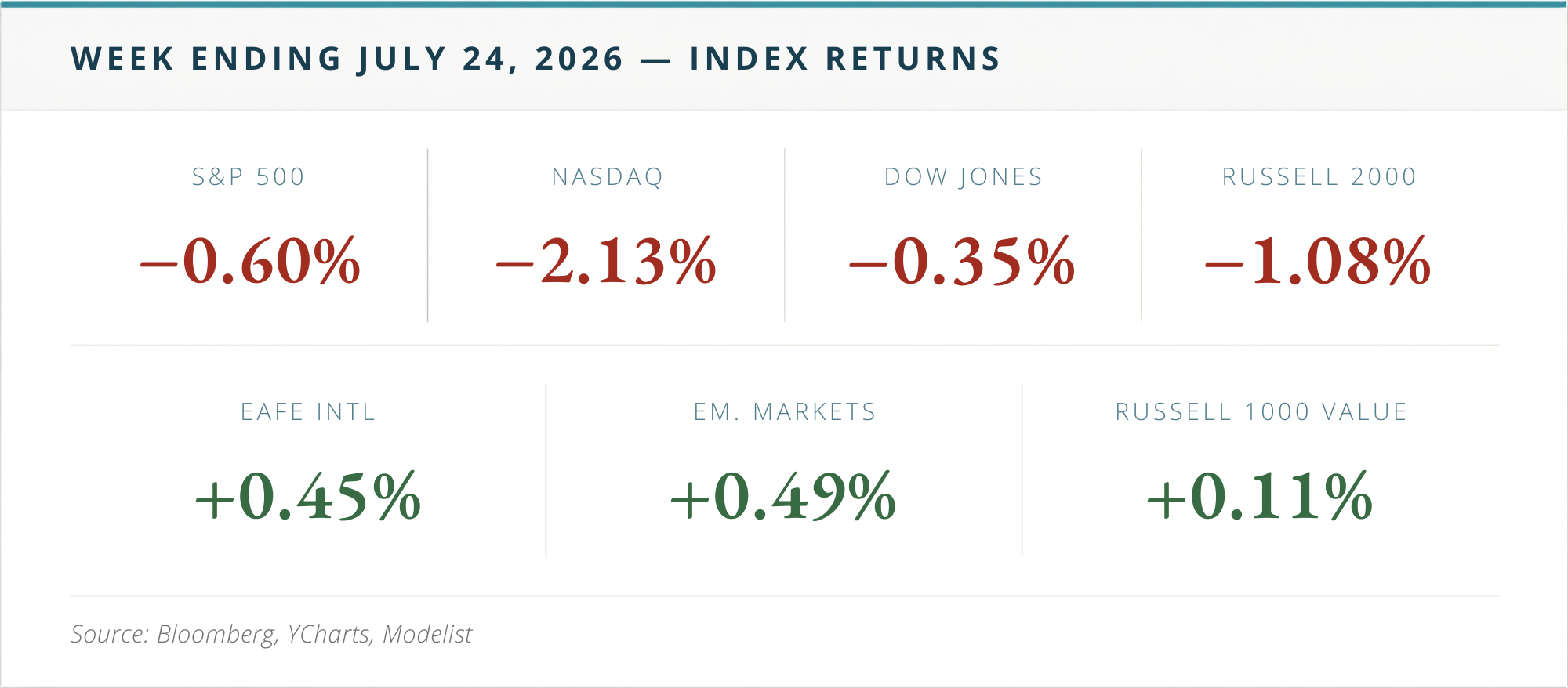
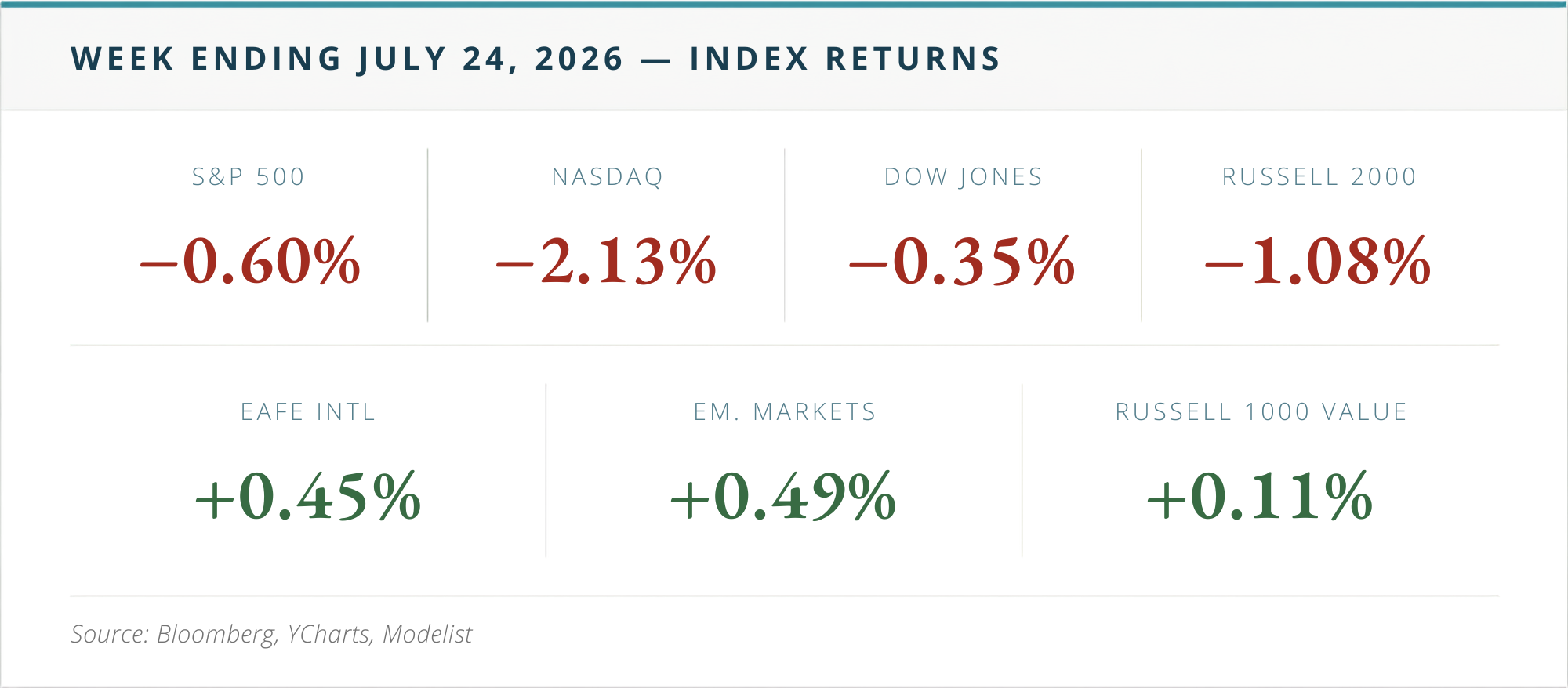
The S&P 500 slipped 0.60% last week and the Nasdaq fell 2.13%, and on the surface that looks like a continuation of the technology wobble that defined the week before. It wasn't. The most important move of the week didn't happen in the stock market at all — it happened in the bond market, and it undid, in five trading days, the story the same market had told itself a week earlier.
The Bond Market Took Back Last Week's Relief
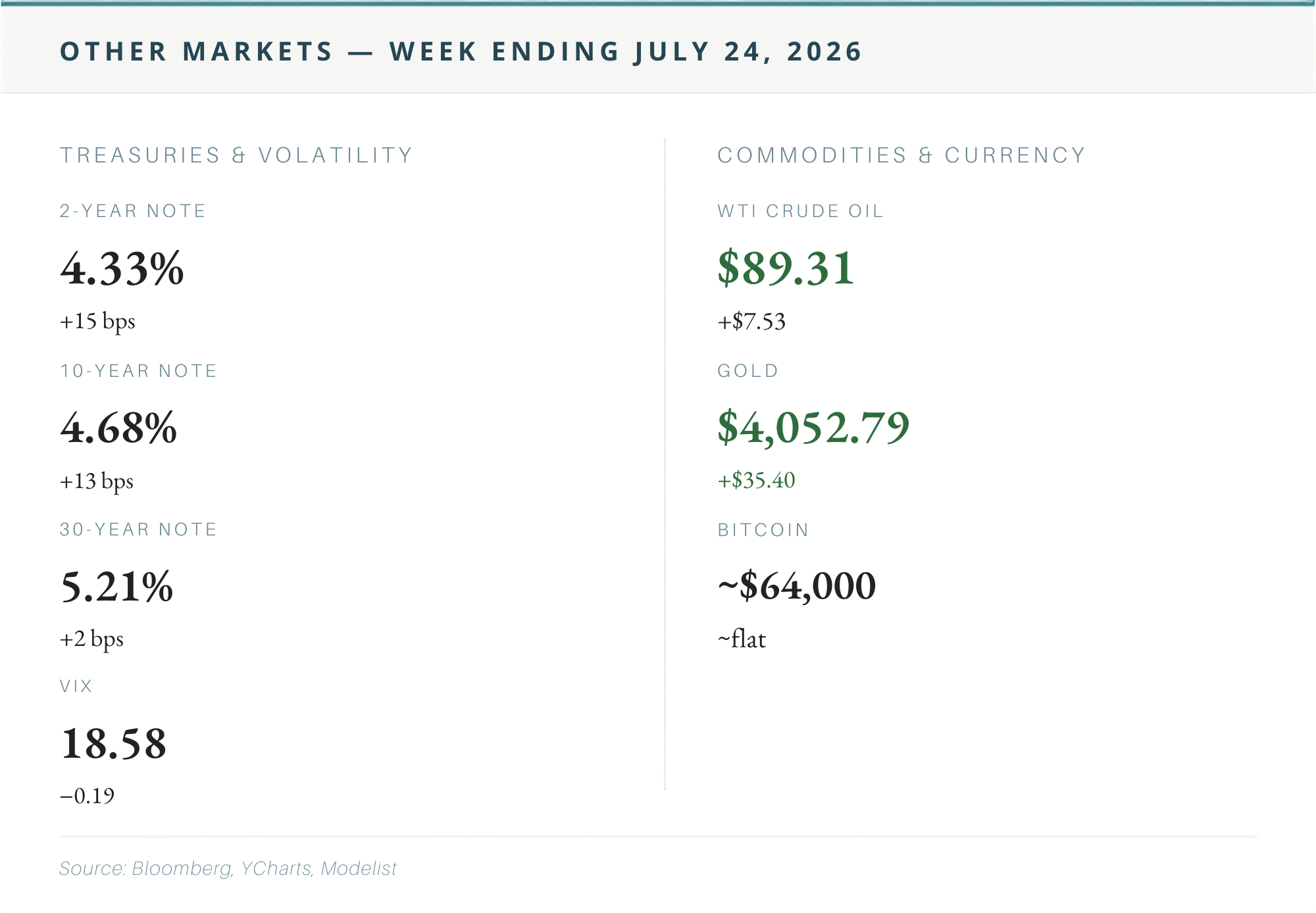
A week ago, the best inflation report in a year sent Treasury yields lower: the 2-year eased to 4.18%, the 10-year to 4.55%, and the market let itself believe the path to lower rates had cleared. This week that move reversed, and then some. The 2-year yield jumped 15 basis points to 4.33%. The 10-year rose 13 to 4.68%. Yields climbed across the entire curve — in the very same week that stocks fell.
That combination is the whole story, because it rules out the comfortable explanation. When stocks fall because investors fear a slowing economy, yields usually fall alongside them: money moves into the safety of bonds, lifting their prices and pushing yields down. That is not what happened here. Stocks fell and yields rose together — which points to a different worry entirely. Not that growth is fading, but that inflation is proving sticky, and that the Federal Reserve will have to hold rates higher for longer than the market hoped just seven days ago.
The reason sat in the oil market. Crude climbed another $7.53 to $89.31 a barrel, extending a rally that has now added roughly $18 over two weeks as tensions in the Middle East escalated. A sustained energy shock is precisely the mechanism that turns a good inflation report into a temporary one — it raises the cost of nearly everything that has to be produced, shipped, or heated. Last week the bond market gave June's cooling the benefit of the doubt. This week, with oil pressing toward $90, it stopped.
Underneath the Index, a Rotation — Not a Retreat
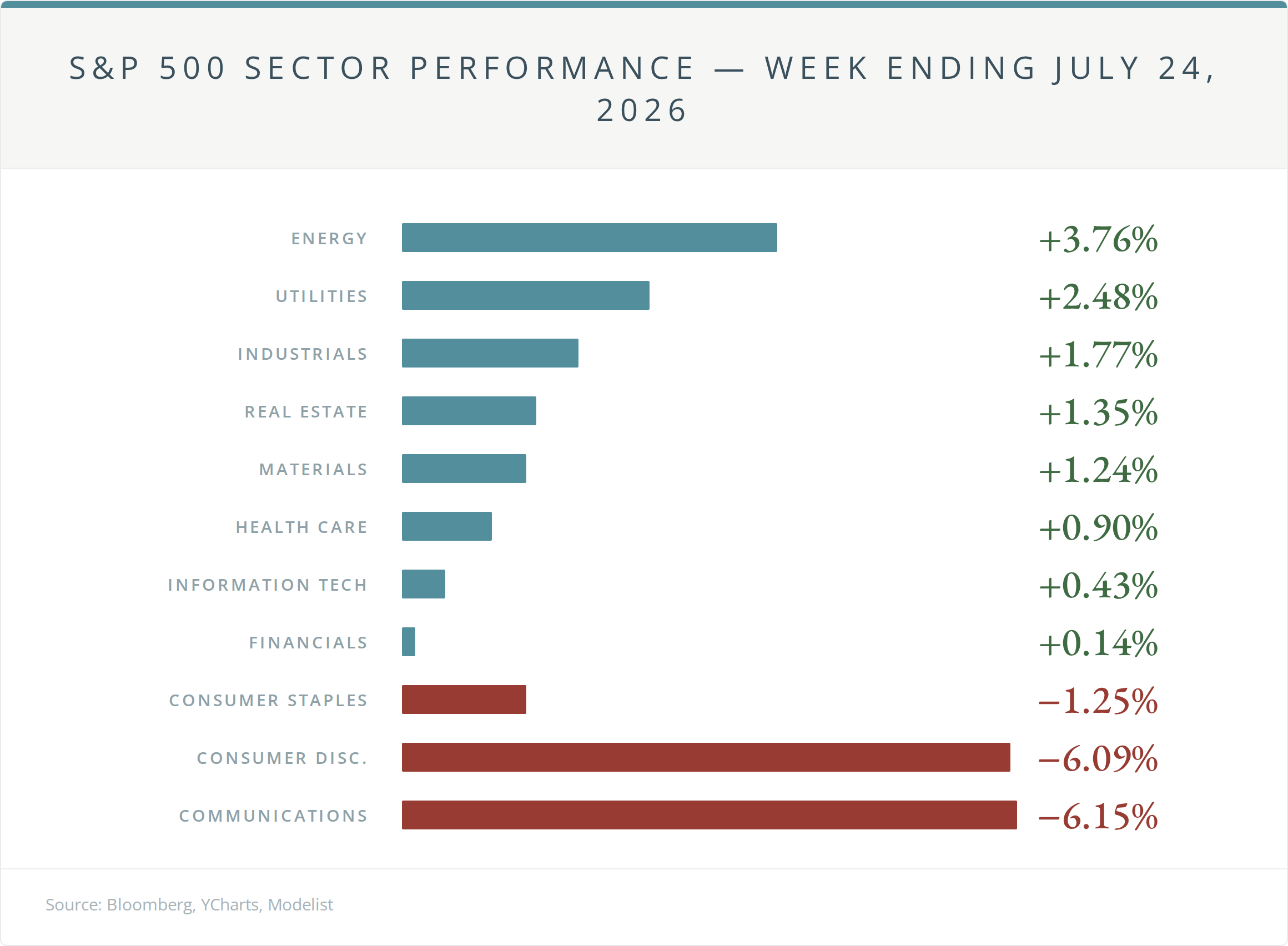
Here is the tell that this was a repricing and not a panic: the VIX, the market's fear gauge, actually fell on the week, easing to 18.58. Stocks dropped, oil spiked, and volatility declined — three things that rarely travel together unless investors are rearranging their portfolios rather than fleeing them.
The sector map confirms it. The weakness was narrow and specific: Communications fell 6.15% and Consumer Discretionary 6.09%, the two most growth- and technology-adjacent corners of the market. Almost everywhere else held or gained. Energy rose 3.76%, Utilities 2.48%, Industrials 1.77%, and Real Estate 1.35% — the sectors that benefit when energy prices climb, or that investors lean on when they want steadier income. Value outran growth: the Russell 1000 Value index finished the week higher even as the Nasdaq lost more than two percent.
This is what money in motion looks like. Investors didn't abandon the market; they sold its expensive, rate-sensitive corner and bought the parts that hold up better when inflation runs warm and the Fed stays cautious. For a retirement portfolio, that distinction is everything. A rotation is something you can plan around. A panic is something you can only endure.
Everything Points to Wednesday
What makes last week unusual is that the repricing came before the news, not after it. There were almost no economic releases of consequence — the Leading Economic Index and the manufacturing PMI both came in soft, new home sales a touch better — so the market wasn't reacting to fresh data. It was positioning for what's ahead.
And what's ahead arrives fast. The Federal Reserve announces its decision Wednesday. On Thursday, the Fed's preferred inflation gauge, the PCE index, is released. Consumer confidence lands Tuesday. In other words, the market just nudged its inflation expectations higher and pulled its rate-cut hopes back — two days before the two events most likely to confirm or deny that call. The bond market has placed its bet. This week tells us whether it was right.
The Bottom Line
For anyone drawing income from a portfolio, the setup that emerged last week — firmer long-term yields and an inflation picture that refuses to settle — is the one that matters most. It touches both sides of a retirement plan at once: the bonds meant to serve as stable ballast, and the purchasing power of the income those bonds produce.
This is exactly the environment the Bucket Plan® is built for. When near-term income is held separately — in assets chosen for stability rather than reach for yield — a week when the bond market reprices inflation becomes information you monitor, not a shock you absorb. The households that struggle in weeks like this are the ones whose "safe" money and "growth" money were never actually separated, only labeled that way.
The larger point is that none of this moves in isolation. Your bond ladder, your withdrawal sequence, your exposure to the handful of growth names that fell hardest last week, and your sensitivity to where the Fed lands Wednesday are all the same conversation. Coordinating them on purpose — before the Fed meets, not after — is the difference between a plan and a collection of accounts.
If you're not certain how last week's move touches your own income plan, Schedule a 20-Minute Due-Diligence Q&A Call — ideally before Wednesday, not after.