
Bonds Rallied Last Week Despite 3.7% Inflation. Your Next Year of Income Shouldn't Depend on That Repeating.
September's inflation report pushed the annual CPI rate to 3.7%, and producer prices finished 6.3% higher than a year earlier. Hot inflation is supposed to be bad news for bonds. Last week, long-term Treasuries rallied anyway.
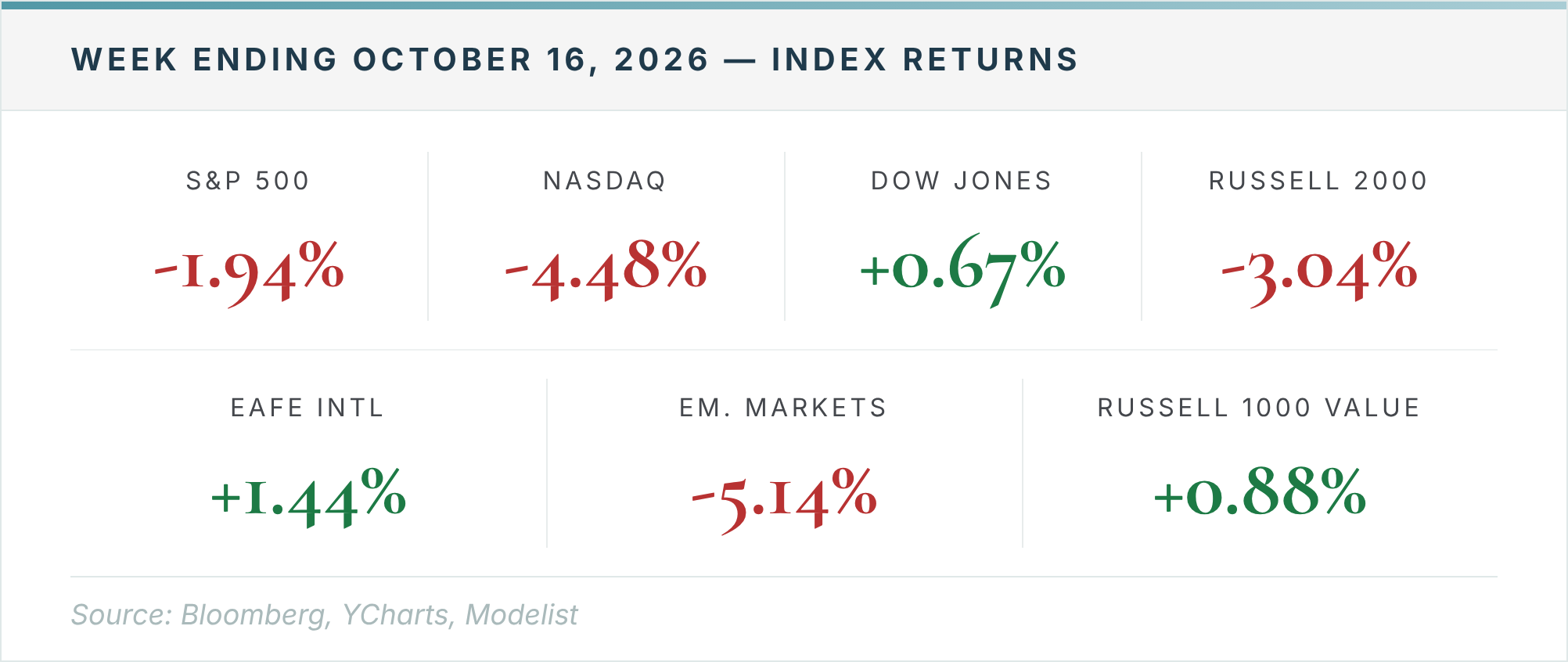
The reason sat in the stock market. Information Technology fell 6.37% for the week and the NASDAQ lost 4.48%, in a selloff concentrated in the companies spending most heavily on AI infrastructure. The damage stayed narrow. The S&P 500 fell 1.94%, while the Dow gained 0.67% and the Russell 1000 Value index rose 0.88%.
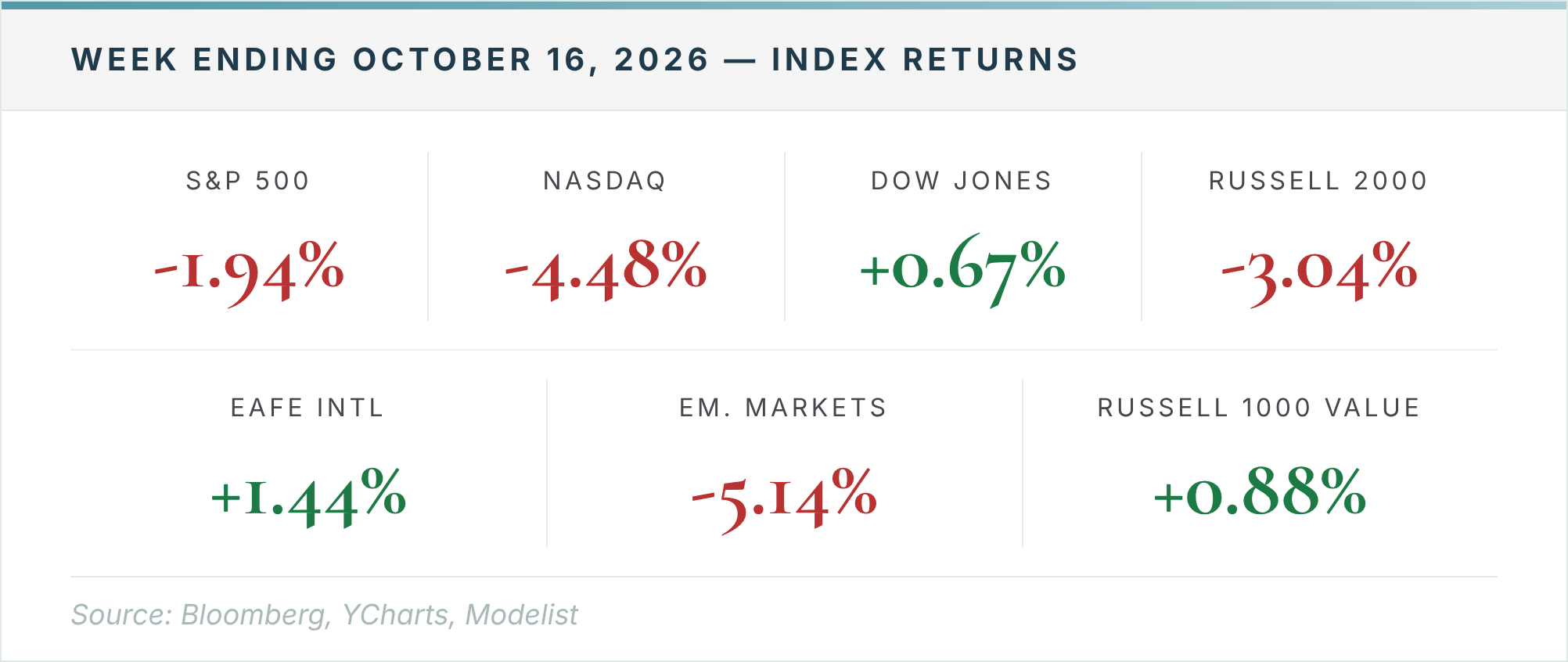
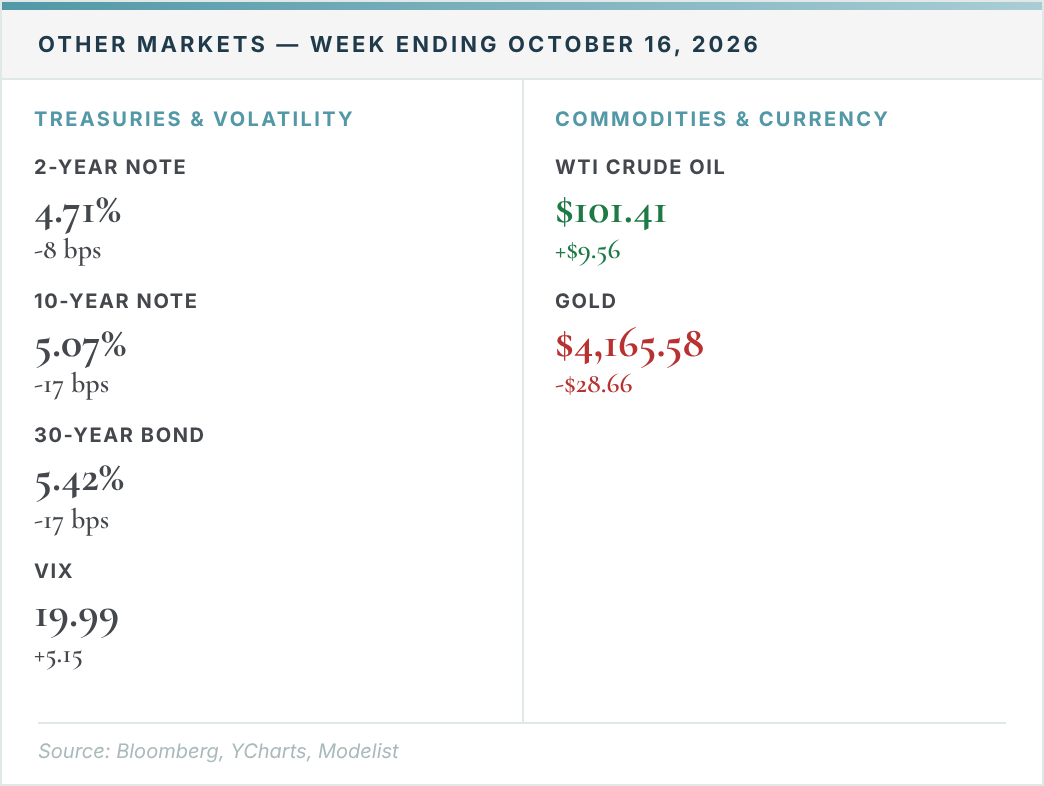
Money leaving technology went elsewhere. Consumer Staples gained 5.05% and Health Care 3.44%, and Energy rose 5.02% with crude oil back above $100 a barrel. Treasuries drew the same demand, and that demand outweighed the inflation data. The 10-year yield fell 17 basis points to 5.07%, and the Bloomberg US Aggregate bond index returned 0.88%.
A Bond's Price Answers Two Questions at Once
One question is what inflation will do to the value of a bond's fixed payments. The other is how much demand there is for safety right now. Most weeks, one answer outweighs the other, and you learn which one only after the fact.
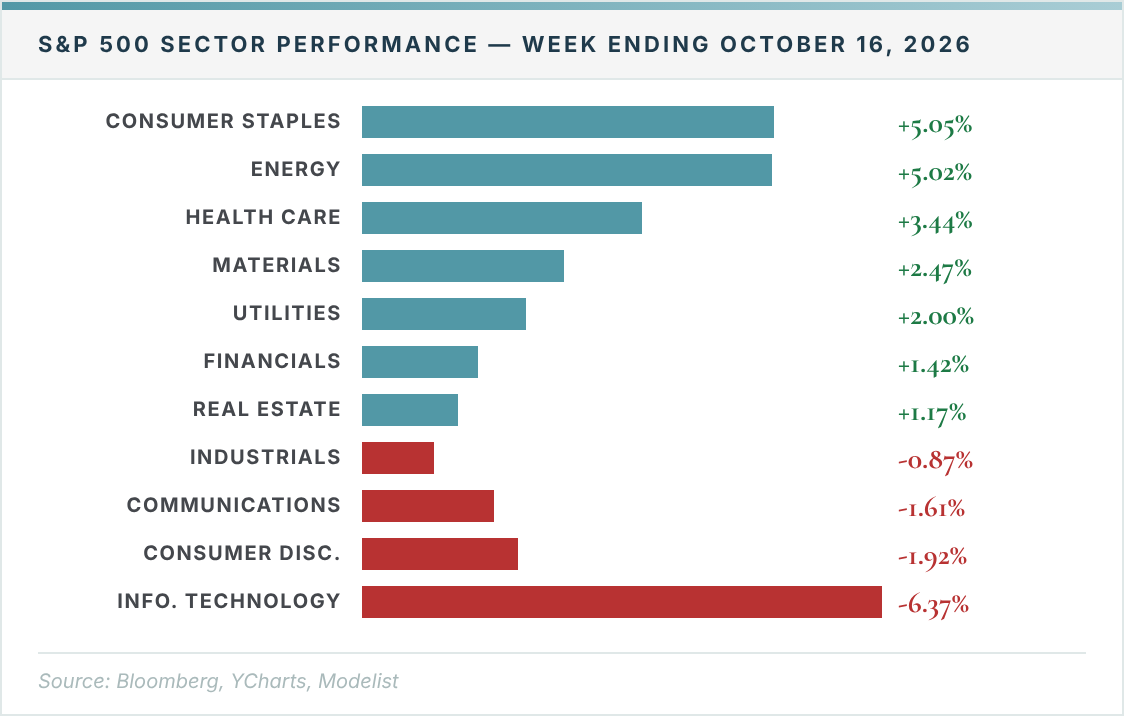
Both pressures grew last week. Crude oil rose $9.56 to $101.41 a barrel, which feeds the inflation side. The VIX, a gauge of expected stock market volatility, rose 5.15 points to 19.99, which feeds the safety side. Safety won the week.
Two weeks ago, the pattern ran the other way. Weak hiring data should have pulled rates down, and only short-term rates fell. Long-term bonds shrugged off good news for bonds then, and shrugged off bad news for bonds last week. Taken together, those two weeks say something useful: the long end of the bond market does not respond to economic data on a schedule anyone can plan around.
Maturity decides how much of that tug-of-war a bond feels. The 2-year yield moved 8 basis points last week, to 4.71%. The 10-year and 30-year each moved 17. The longer a bond locks in its rate, the further its price travels when the answer changes.
None of this makes long bonds a poor holding. At 5.07% on the 10-year and 5.42% on the 30-year, the income is real. The issue for a retiree is what the price looks like on the day a withdrawal comes due.
The year-to-date numbers show what that means for anyone drawing income. Even after last week's gain, the Bloomberg US Aggregate is down 1.63% for 2026, while the S&P 500 is up 12.89%. A retiree who planned to fund this year's withdrawals by selling bonds, on the theory that bonds are the steady side of the portfolio, would be selling the side that is behind for the year.
Want the Full Picture?
The complete Market Insights Weekly for the week ending October 16, 2026 includes the full equity and fixed income tables, from one week through ten years. View the full report (PDF)
What This Means for Your Retirement Plan
A retirement income plan should not need to know which question bonds will answer next. The Bucket Plan® is built around that problem. Money for the next few years of withdrawals is held in its own segment, in shorter-term holdings, so next year's income does not depend on whether long-term bonds rally or fall the next time stocks drop. Longer-term bonds and stocks sit in the segments meant for later years, where a week like this one has time to play out in either direction.
If you are drawing income now, or will be within a few years, and you are not sure which of your accounts would fund next year's withdrawals after a week like this one, that is worth knowing in a calm week. Schedule your 20-Minute Due-Diligence Q&A Conversation.