
Emerging Markets Ended Flat on a 21-Point Spread. Your Largest Holding Isn't the Average
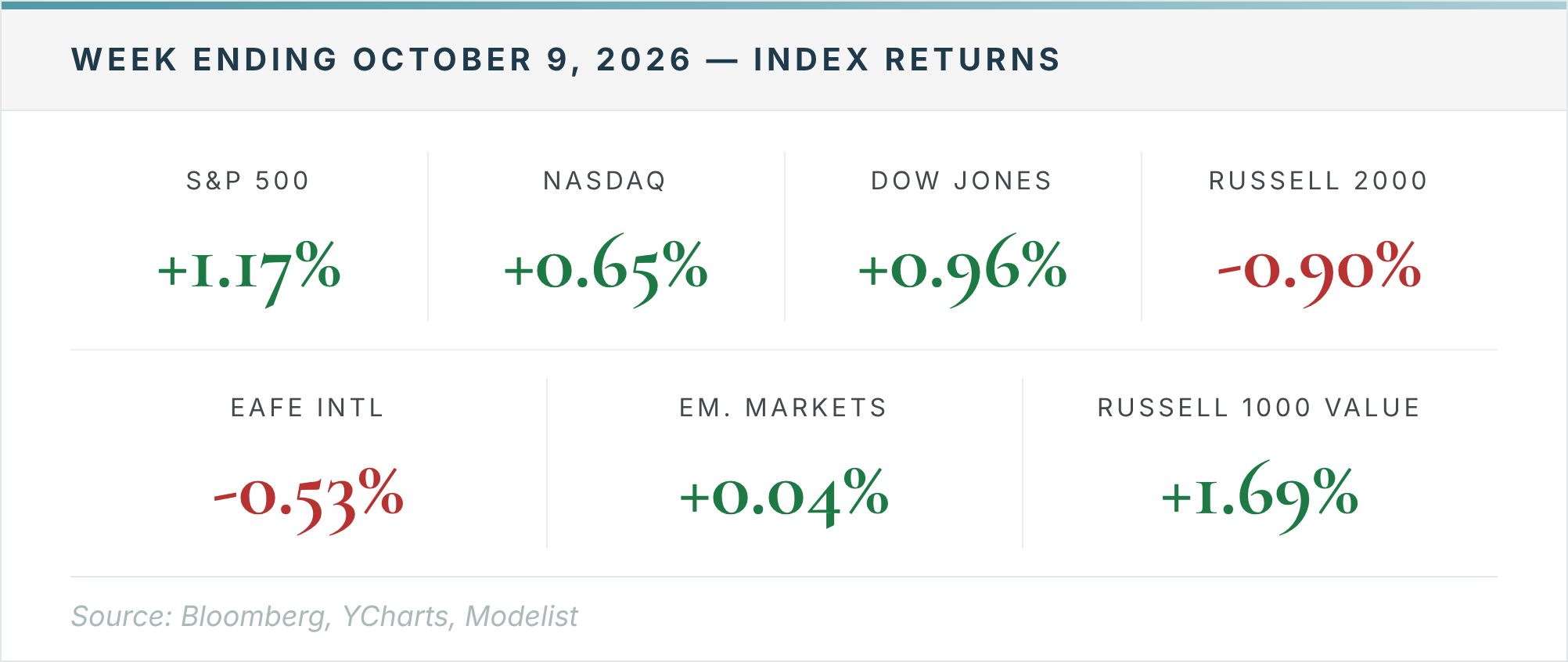
Emerging-market stocks finished last week up 0.04%. That figure describes almost no one's actual experience of the week. Brazil's market gained 14.0% and South Korea's lost 7.6%, and the index averaged the two into something that reads as if nothing happened.
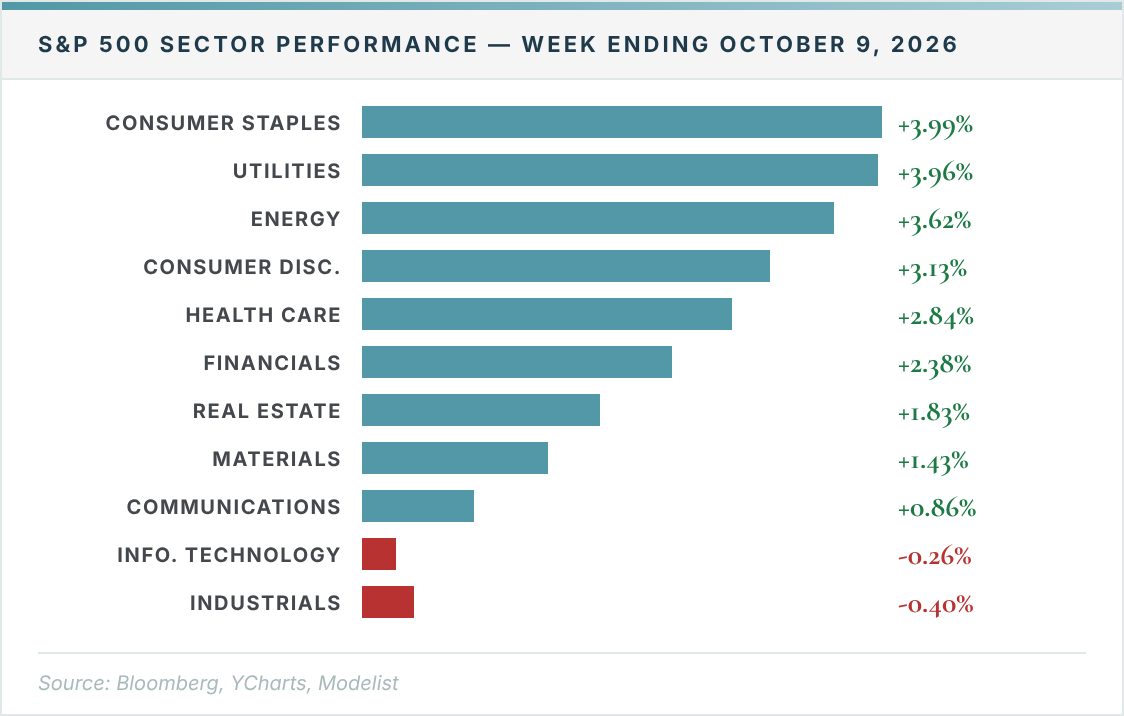
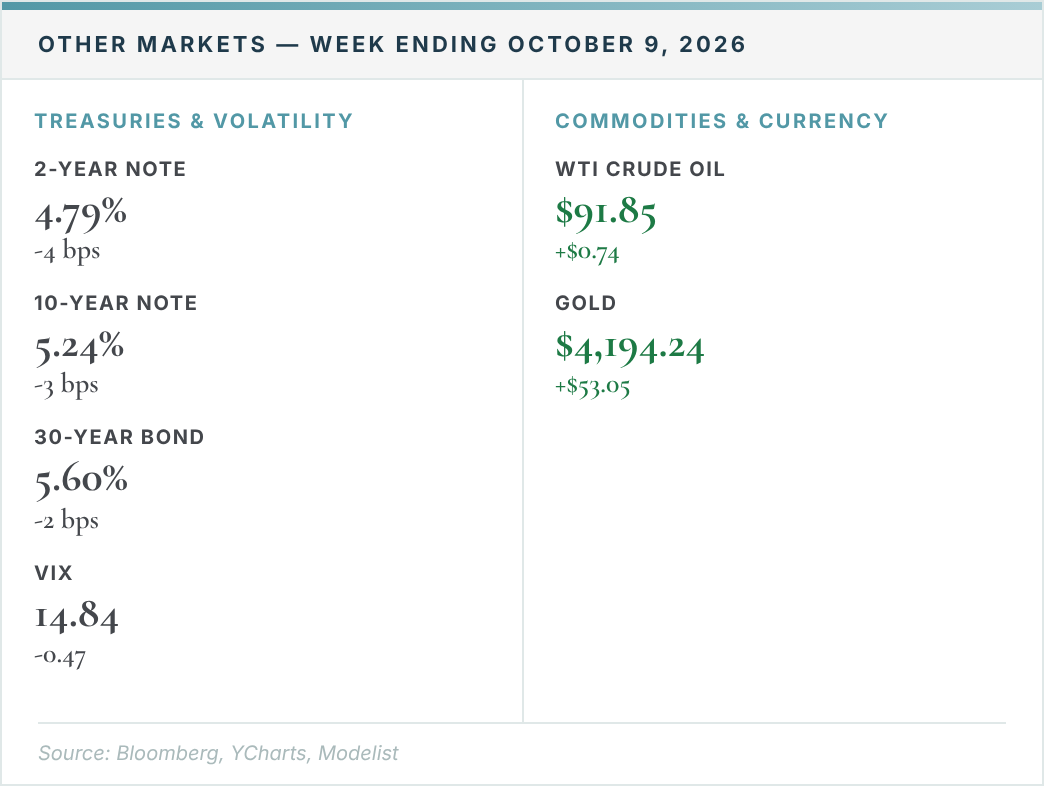
The same pattern ran through U.S. stocks. The S&P 500 gained 1.17%, and the VIX, the market's gauge of expected volatility, closed the week at 14.84, a calm reading by its usual standards. Beneath that calm, PTC gained 35.0% in five trading days and Intel lost 12.3%. Consumer staples rose 3.99% while industrials fell 0.40%, and the small-cap Russell 2000 slipped 0.90% in a week when the large-cap index rose.
The Index Reports the Average. Your Account Reports the Pieces.
None of this is a malfunction. A broad index holds hundreds of companies in measured amounts, so a 35% gain in one stock and a 12% loss in another barely register in the total. The 1.17% weekly gain and the low VIX reading are honest numbers. They describe a portfolio that owns everything in proportion.
Many people approaching retirement don't own that portfolio. They hold a large block of a former employer's stock, a few companies bought decades ago, or a fund that worked so well it now dominates the account. For that investor, the return that mattered last week was whatever their largest holding did, and a single stock can move 12% in a week while the headline index moves about 1%.
Concentration also builds without anyone choosing it. A position that started at 5% of an account can grow to 20% after a few strong years without a single new purchase. The statement doesn't flag the change, and the weekly index returns that fill the financial news give no sign of it. A low VIX reading can make that exposure feel safer than it is, because the gauge is built from options on the whole S&P 500, and a concentrated investor doesn't hold the whole S&P 500.
Why Large Positions Tend to Stay Large
Most people with a concentrated position already know it's big. What usually keeps it in place is the tax bill. Selling shares bought long ago at a low price realizes the capital gain, and California taxes that gain as ordinary income, on top of the federal capital gains rate. A low-basis position can feel too expensive to sell and too large to keep.
That tension rarely gets resolved in one tax year, and it doesn't have to be. The tools for reducing a concentrated position are well established: spreading sales across several years to manage brackets, pairing gains with harvested losses, giving appreciated shares to charity instead of cash, and weighing the step-up in basis heirs may receive. Which of them fit depends on age, income needs, estate plans, and how long the money has to last. Selling all at once and holding indefinitely are only the two ends of the range.
What This Means for Your Retirement Plan
A week in which emerging markets finished flat across a 21-point spread between two countries is a reminder that the number on the news is rarely the number on your statement. In a coordinated plan, a concentrated position is reviewed as a tax decision as much as an investment one. Our Tax Management Journey® weighs the cost of reducing a position across several years and phases of retirement, so the timing of each sale sits alongside bracket management, required minimum distributions, Medicare premiums, and what heirs will eventually inherit, instead of being settled one tax return at a time.
If your account holds a position that grew larger than you ever decided it should, or you're not sure what it would cost to reduce it, that's worth looking at with someone who can see the whole picture. Schedule your 20-Minute Due-Diligence Q&A Conversation to see if CRA is the right fit.