

Market Insights — A Strong Week, but a More Complex Backdrop
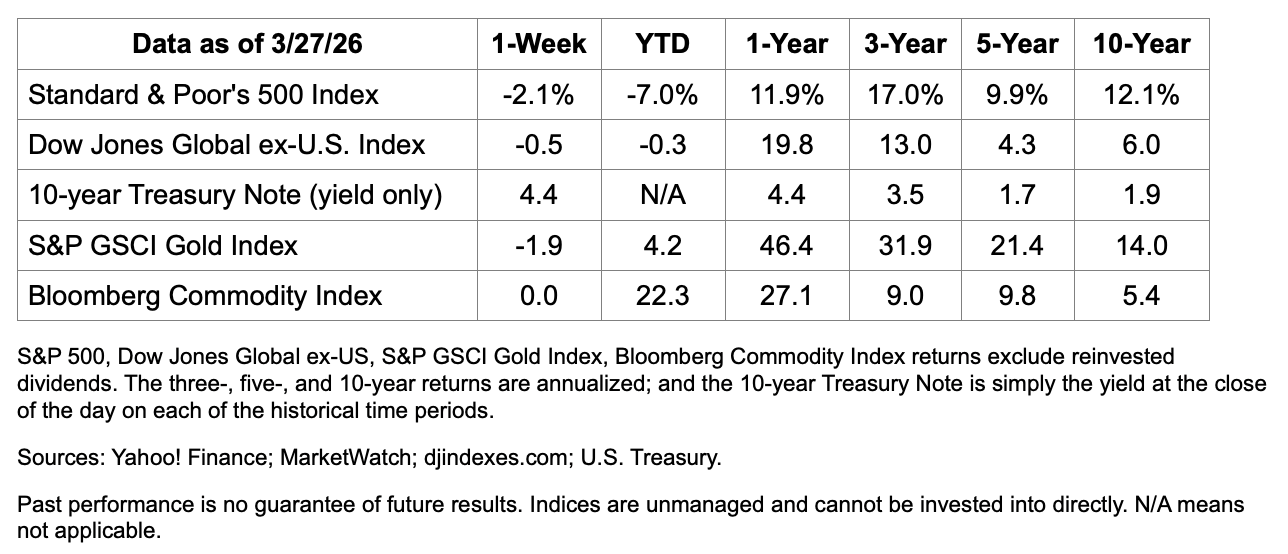
Markets moved higher this week following a volatile start to the year, as improving sentiment around geopolitical developments and stronger economic data supported a rebound in equities.
But while the surface-level story appears constructive, the underlying environment continues to evolve in ways that may matter more over time.
What happened
Markets rebounded last week, with major U.S. indices posting solid gains after a difficult stretch.
Several factors contributed to the move:
- Stronger-than-expected employment data helped support investor confidence
- Optimism grew around a potential easing of Middle East tensions
- Technology and growth stocks led the recovery
- Oil prices moved higher, reflecting ongoing supply concerns
- Treasury yields remained elevated, reinforcing uncertainty around the rate path
Individually, these developments are not unusual. But together, they continue to shape how markets are interpreting the path forward.
What’s changing beneath the surface
The more meaningful shift isn’t any single data point—it’s the environment they are collectively reinforcing.
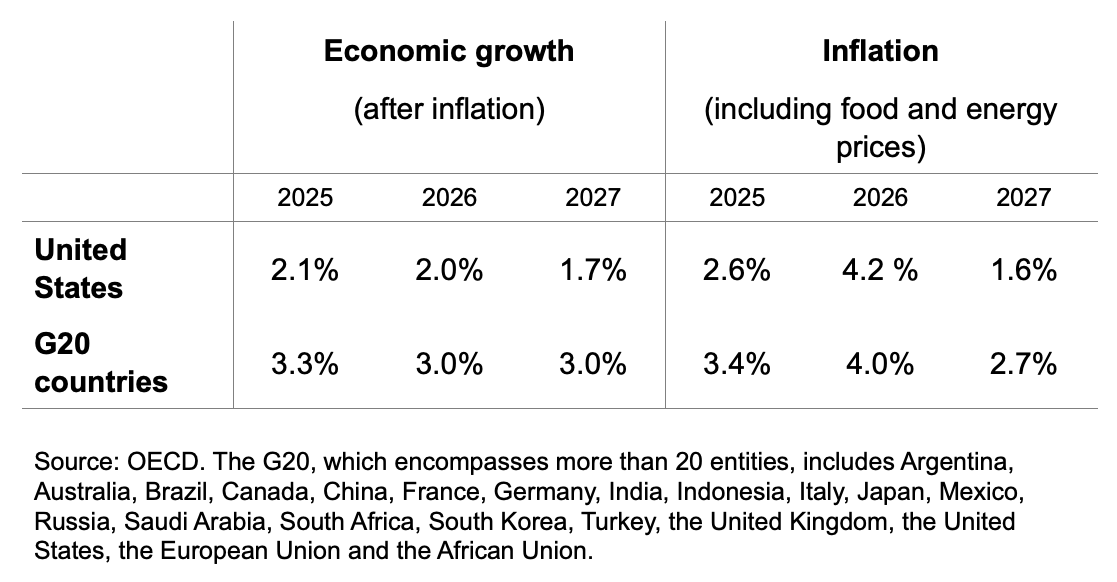
Markets are continuing to adjust to a backdrop where inflation remains more persistent, and interest rates may stay elevated longer than previously expected.
Stronger economic data, combined with rising energy prices, creates a more complicated picture—one where the Federal Reserve may have less flexibility to ease policy as quickly as markets once anticipated.
That doesn’t necessarily disrupt long-term outcomes on its own.
But it does change how decisions behave over time.
Why this matters for planning
Periods like this tend to influence outcomes not through a single event, but through how multiple decisions begin to interact.
In particular:
- Income timing can become more sensitive as interest rates remain elevated
- Tax exposure may shift depending on how withdrawals and distributions are sequenced
- Portfolio behavior can diverge when inflation and rates persist longer than expected
None of these are immediate concerns.
But they are areas where coordination becomes more important—because small adjustments in one area can create unintended consequences in another.
This is where many plans begin to lose flexibility over time—not from one decision, but from how decisions connect.
What we’re watching
Looking ahead, a few areas remain especially important:
- Federal Reserve positioning — whether policy remains restrictive longer than expected
- Inflation trajectory — particularly how energy prices influence broader trends
- Market response — whether recent strength signals stability or continued volatility
- Geopolitical developments — and their potential impact on global supply and sentiment
These factors will shape not just market performance, but the environment in which planning decisions are made.
Closing perspective
Weeks like this can feel reassuring on the surface.
But in many cases, the more important developments are happening beneath that surface—where changing conditions begin to influence how decisions interact over time.
For clients, this is where ongoing coordination becomes most valuable—ensuring that decisions across income, taxes, and investments continue to work together as conditions evolve.
Want a deeper dive?
For those interested in a more detailed breakdown of market performance, sector trends, and economic data:
Click the image to view this week’s Market Insights report: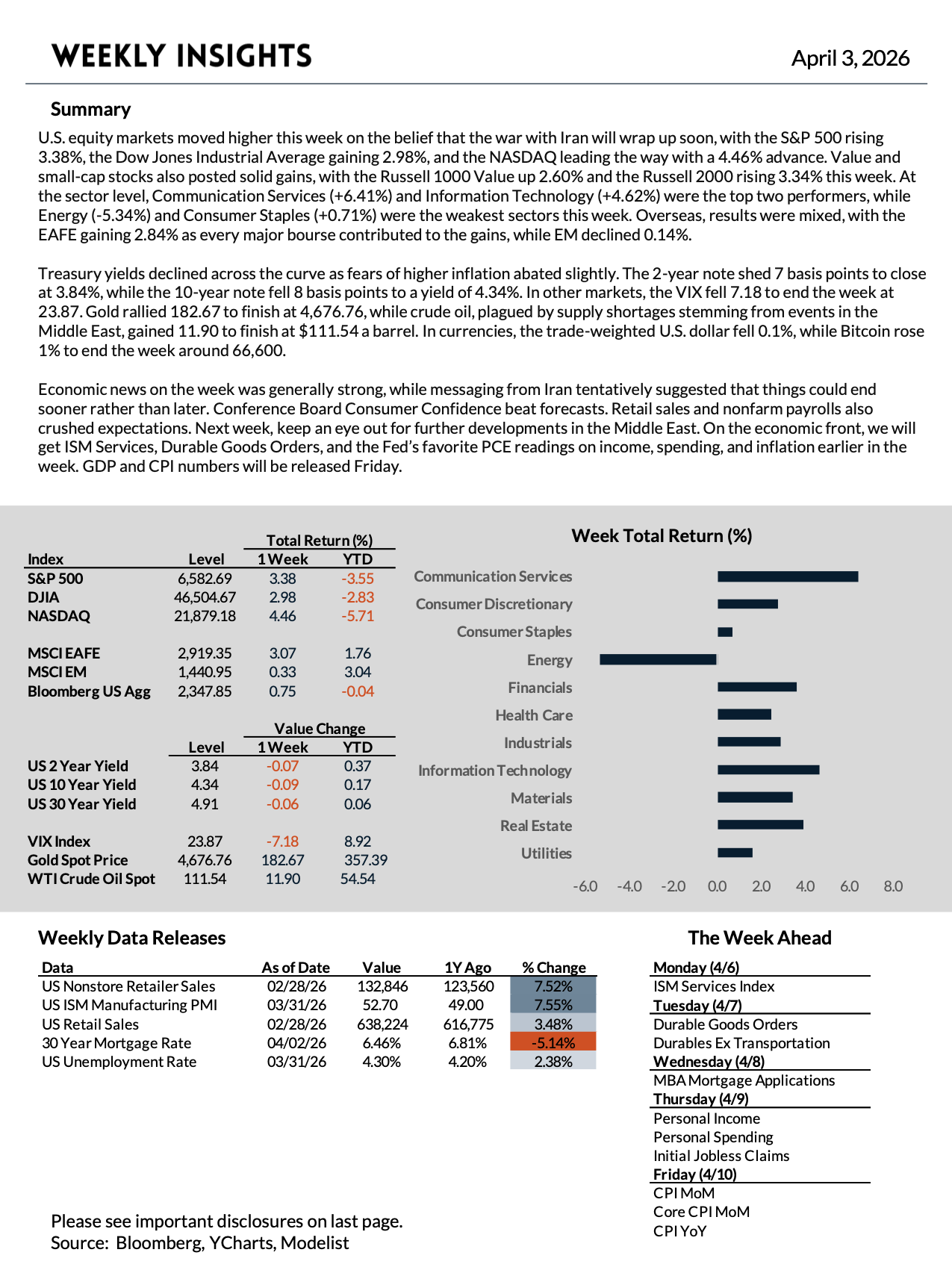
Next step
If you’re already working with us, this is the work happening behind the scenes.
If you’re evaluating your own plan and want to better understand how these moving pieces connect, you can explore how coordinated planning works—or schedule a brief introductory conversation to see if it’s a fit.