
Something Shifted in Markets Last Week. Here's What It Means for Your Retirement.
The headline number was forgettable. What was happening underneath it was not.
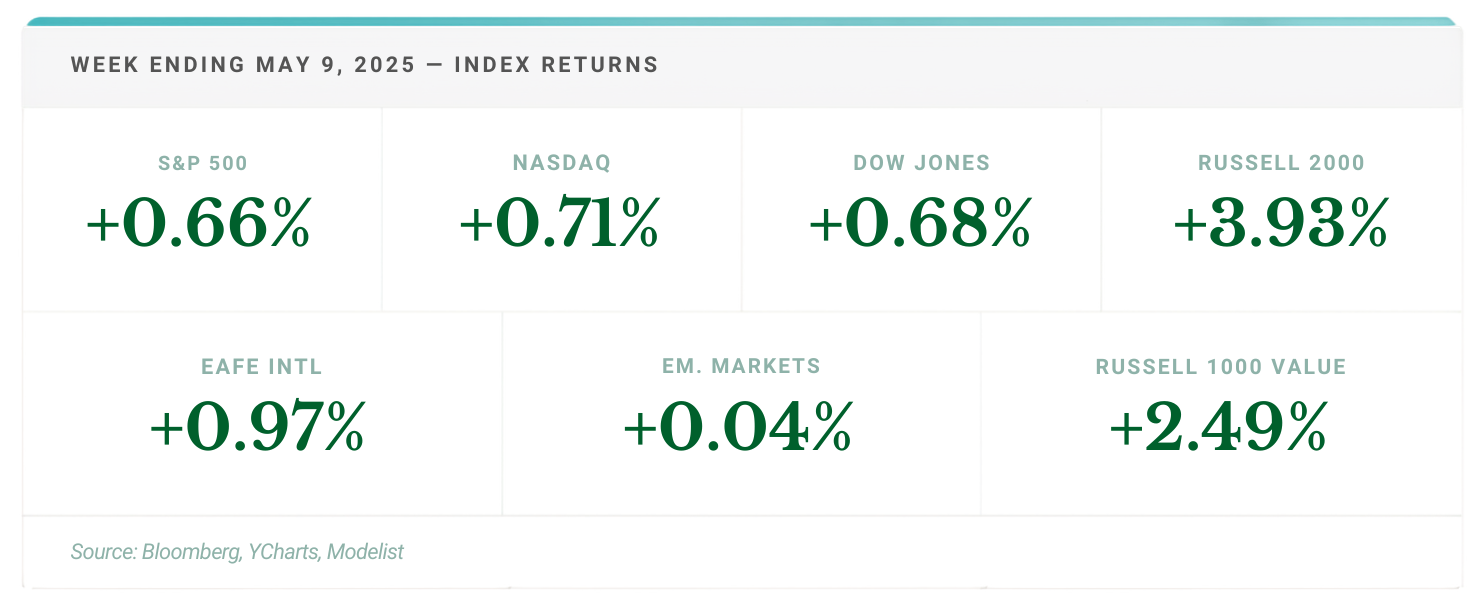
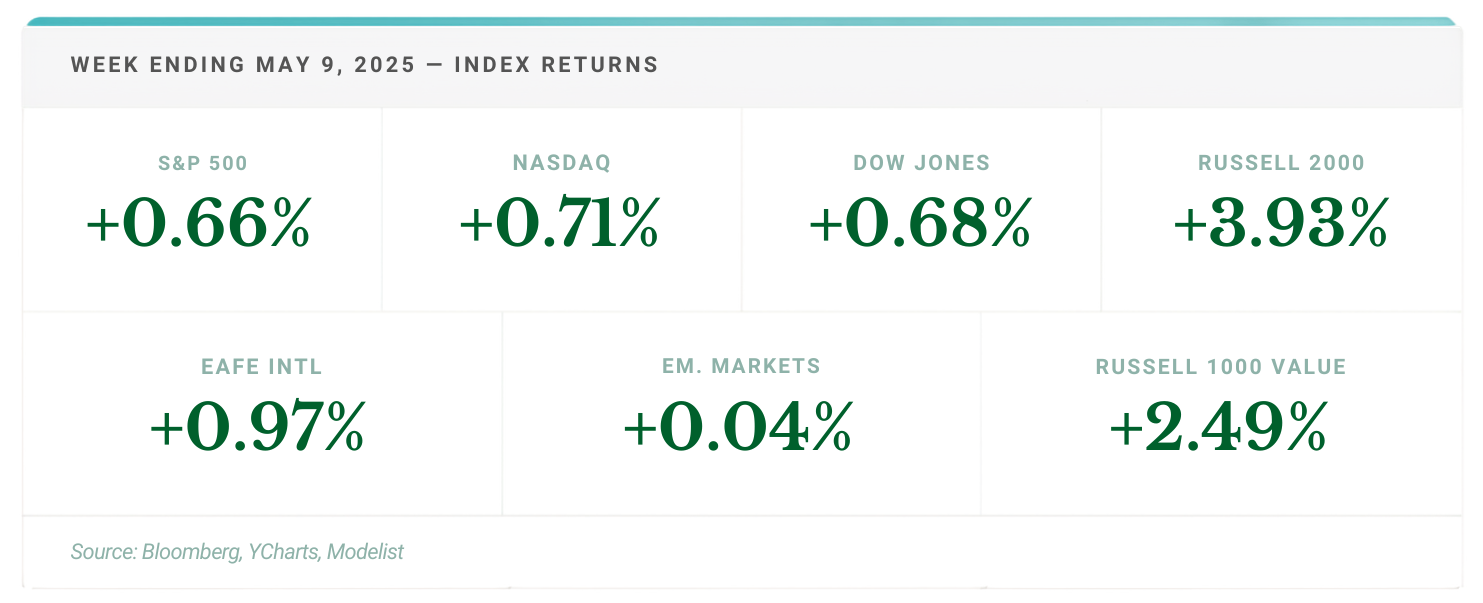
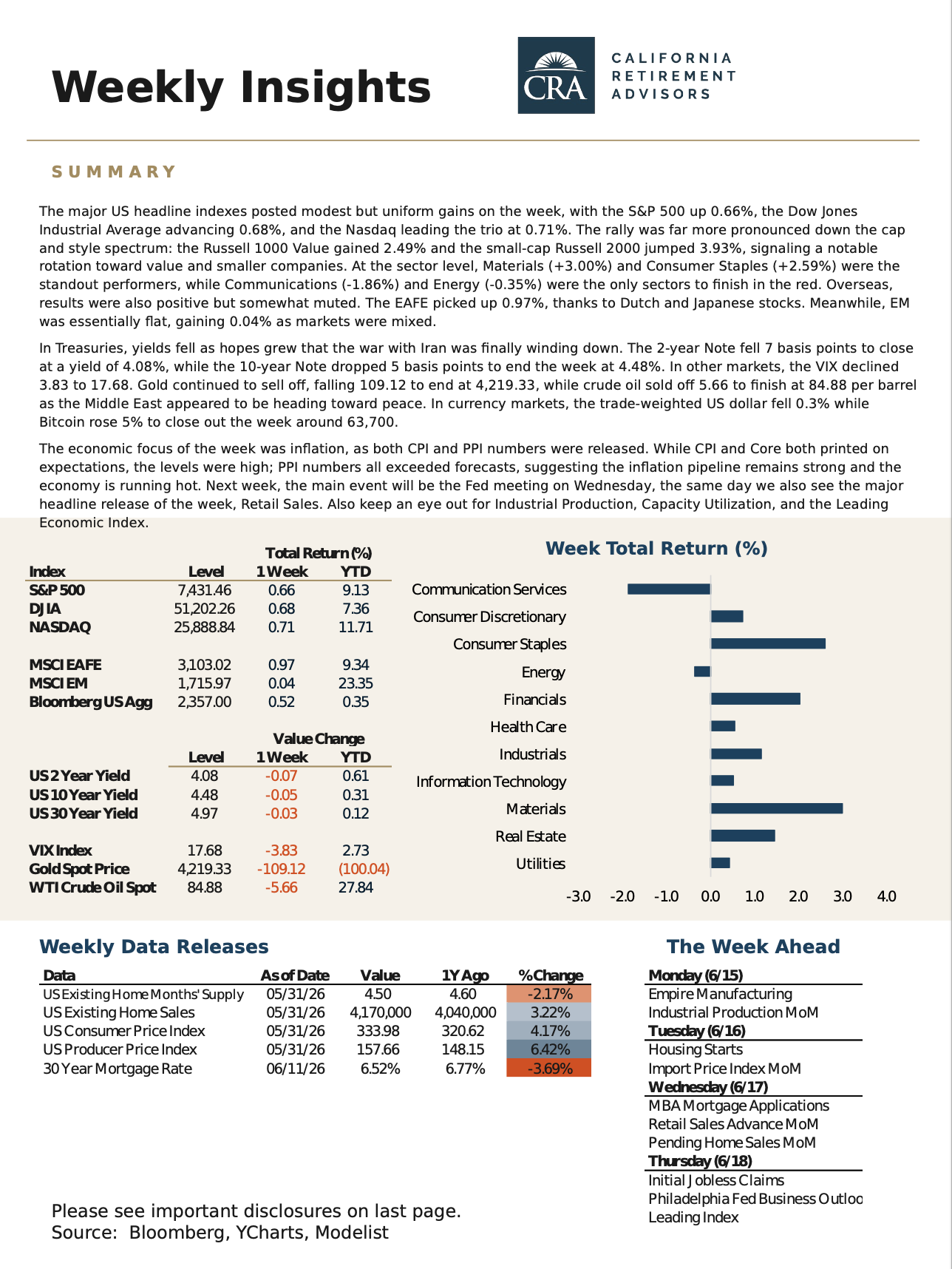
The S&P 500, Dow, and Nasdaq each gained somewhere between 0.66% and 0.71% — the kind of modest, uniform advance that's easy to glance at and move on from. But the Russell 2000 jumped 3.93% and the Russell 1000 Value added 2.49%. Those aren't moving with a crowded mega-cap trade. They signal that investors are broadening their risk appetite rather than pulling back from it — rotating out of the AI-adjacent names and large-cap growth stocks that have driven headline gains for much of this cycle, and into value and smaller companies. The question that follows isn't whether the rotation persists — no one can answer that — but whether the earnings and rate environment can support it. If it can, breadth this wide is genuinely constructive. If it can't, this week looks more like a short-term catch-up than the start of something new.
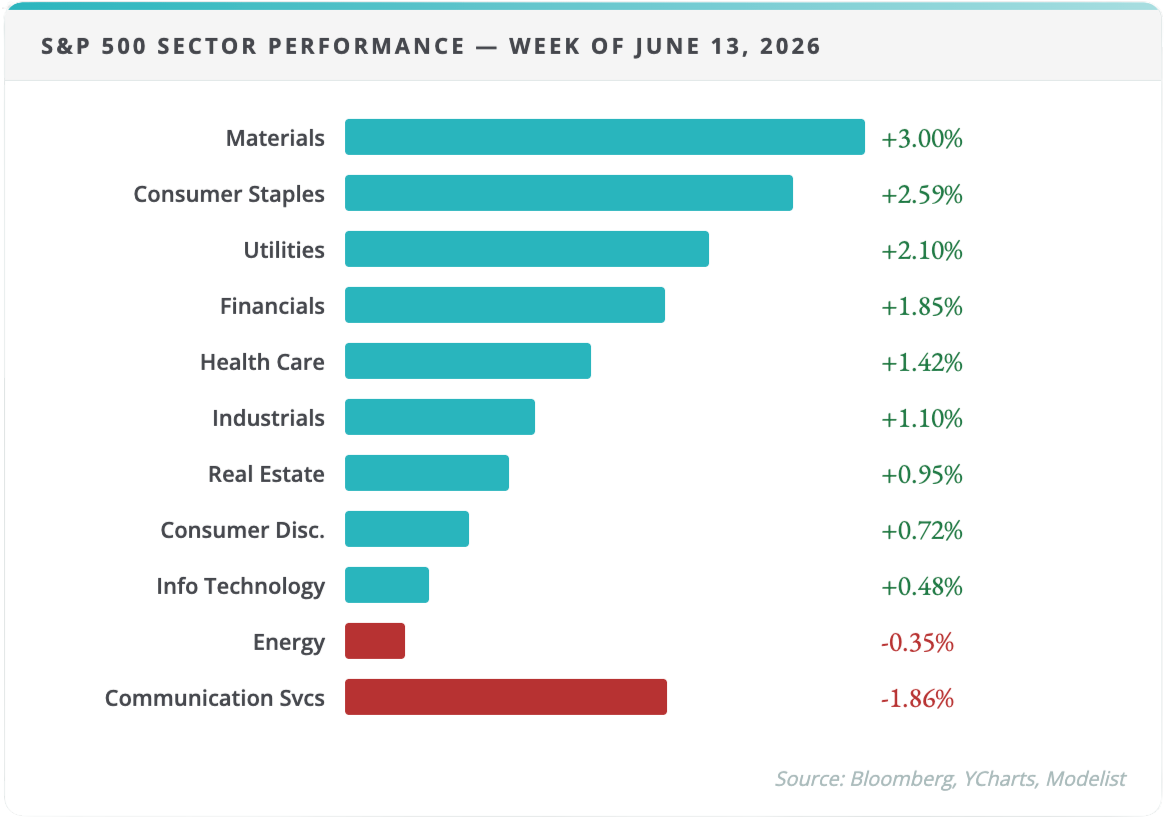
At the sector level, Materials gained 3.00% and Consumer Staples added 2.59% — one cyclical, one defensive, both outperforming in the same week. Communications finished last, down 1.86%. The Fed meeting Wednesday, alongside Retail Sales data the same day, will tell us whether this rotation has real footing or whether it reverses the moment rate and growth clarity returns.
The Problem Is What's in the Pipeline
Both CPI and Core CPI came in on expectations — which would normally be reassuring. The problem is that PPI numbers across the board exceeded forecasts, meaning the inflation pipeline is still running hot even if the headline prints didn't shock. Energy re-entered the story as a driver, and oil sold off more than five dollars on the week as Middle East tensions appeared to ease — which helps. If energy stays contained and doesn't bleed into wages and services, this may be more near-term noise than structural risk. If it spreads, the story changes. The Fed is almost certainly in wait-and-see mode, which isn't a bad outcome. But it means the path depends on the next several weeks of data, not Wednesday alone.
Valuations Don't Leave Much Room for Surprise
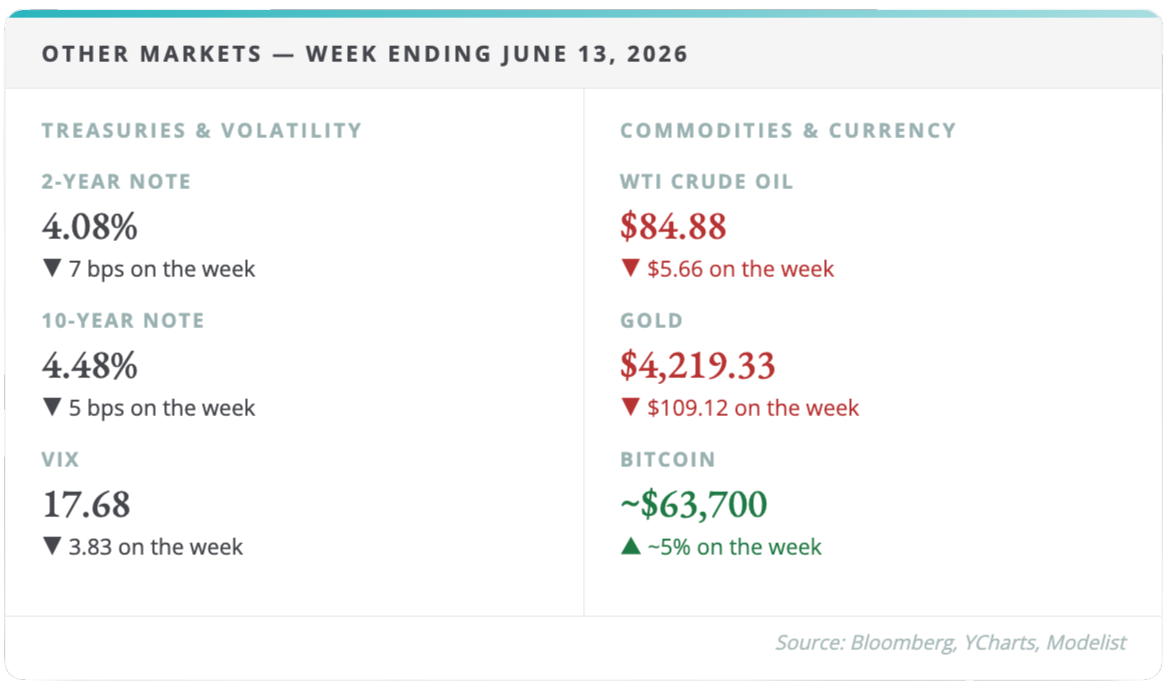
Middle East headlines moved oil, rates, and the VIX hard before reversing as escalation fears faded — the VIX dropped nearly four points to close at 17.68, gold sold off more than $109 to end near $4,219. SpaceX's market debut added to the test, turning the IPO window into a live read on appetite for expensive, capital-intensive growth. Both resolved without significant damage. But the week was a useful reminder: when valuations are extended, there is less cushion for the unexpected. That the market absorbed three separate sources of uncertainty and finished higher is worth noting — and so is the fact that it needed all three to resolve favorably to do it.
Want the Full Picture?
For the complete index returns, all 11 sector breakdowns, treasury yields, and commodities data, view the full Modelist report below.
View Full Weekly Market Report →
What This Means for Your Retirement Plan
The week's uncertainty doesn't change the plan. It's the reason the plan exists. A rotation into value and small caps, sticky inflation in the pipeline, a Fed meeting, and geopolitical headlines that moved markets before reversing — that's not an unusual week. That's markets. A coordinated plan built through the CRAve Life Advisory Process is designed to hold through exactly this kind of noise. The Bucket Plan® separates near-term income needs from long-term growth in a way that doesn't require calling the rotation correctly or anticipating the Fed's next move. What happened last week doesn't require a response. What it might require is a conversation — about whether your income is positioned for a prolonged higher-rate environment, whether your tax picture accounts for what sticky inflation does to a retirement portfolio, and whether the plan you have was built for the market you're actually in.
If you've been meaning to have that conversation, our 20-Minute Due-Diligence Q&A Call is the right place to start.
Schedule a 20-Minute Due-Diligence Q&A Call →