
Tech Leads the Exhale — Markets Climb as Jobs Data Calms the Crowd
Call it the relief rally that actually had data behind it. A technology sector that reminded everyone it still sets the tone, and a jobs report that said the economy isn't breaking, just bending.
The Week in Markets
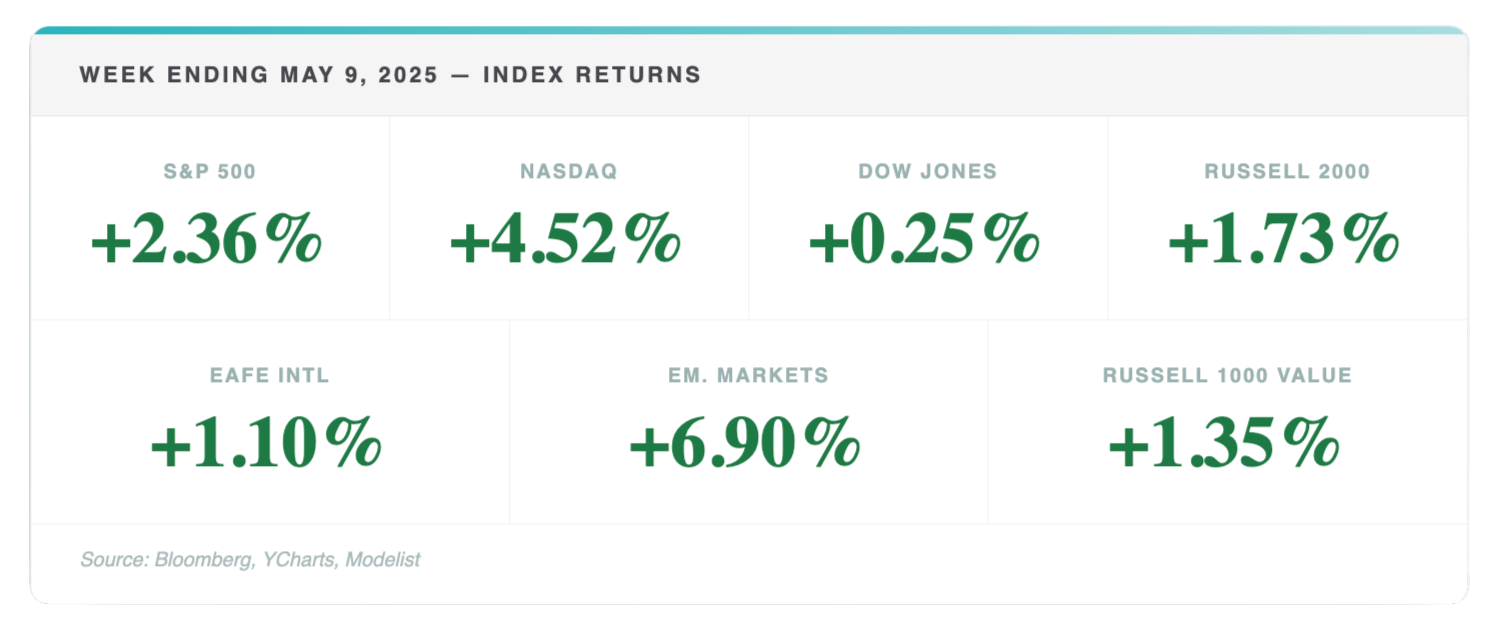
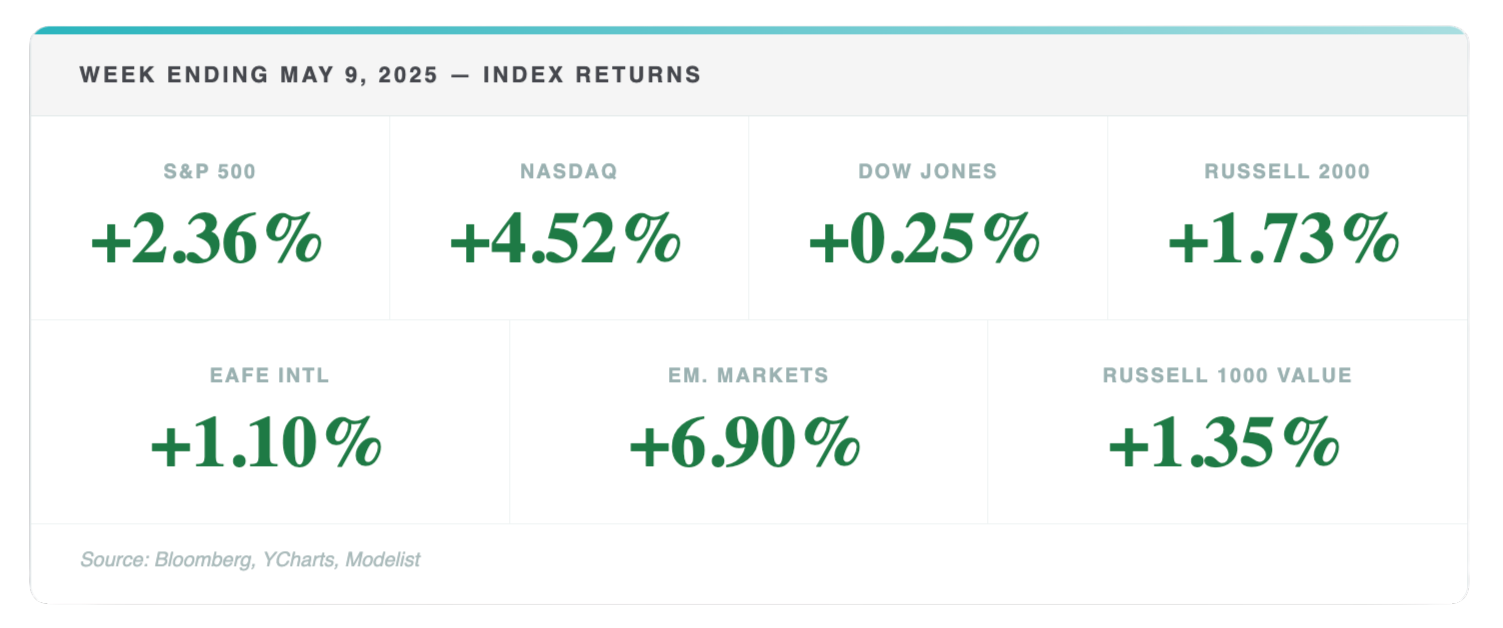
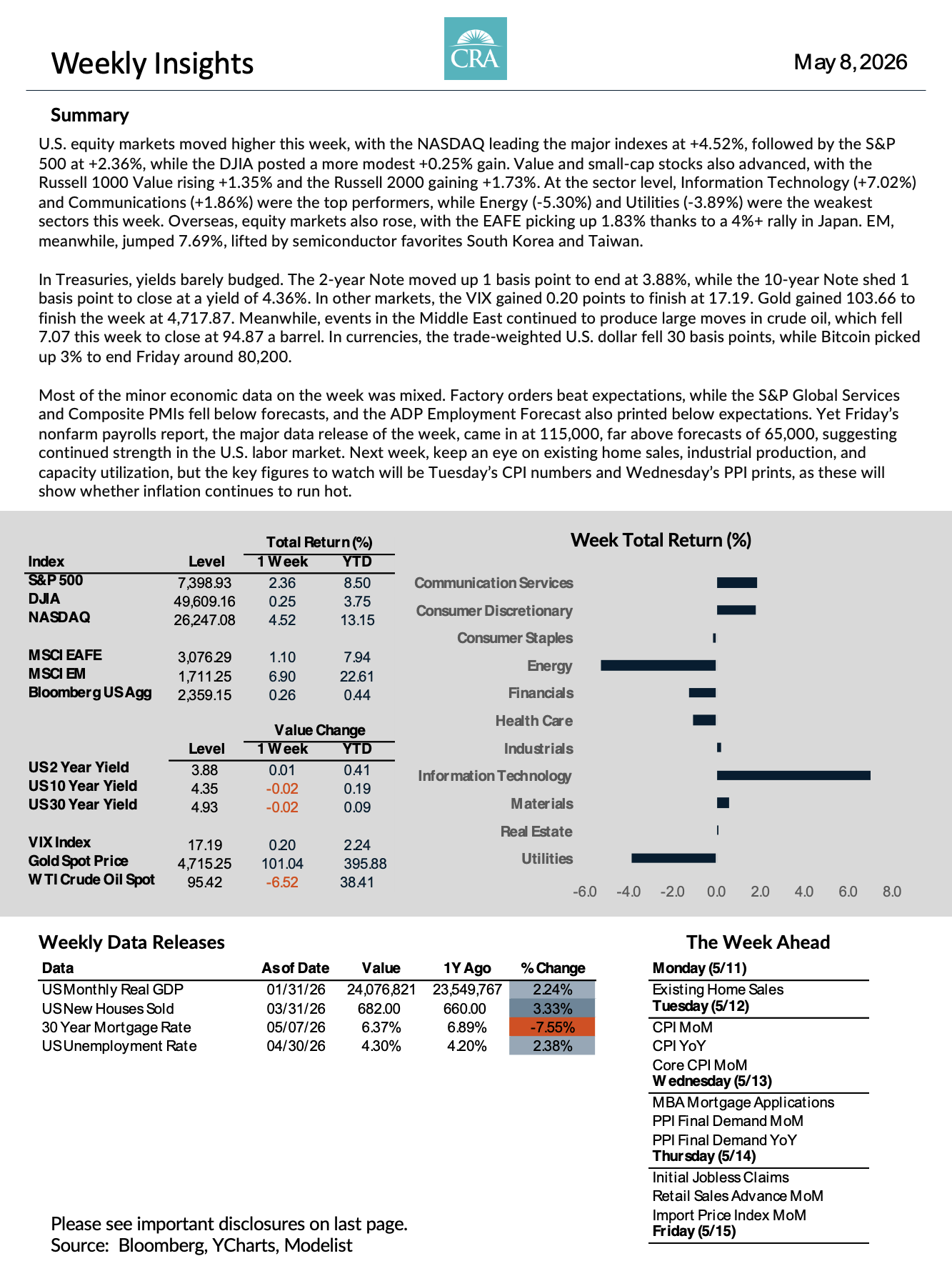
U.S. markets moved broadly higher this week, with meaningful divergence in leadership. The NASDAQ led all major indexes with a gain of 4.52%, followed by the S&P 500 at +2.36%, while the Dow Jones posted a quieter +0.25%. Growth led. Value participated. Defensives did not.
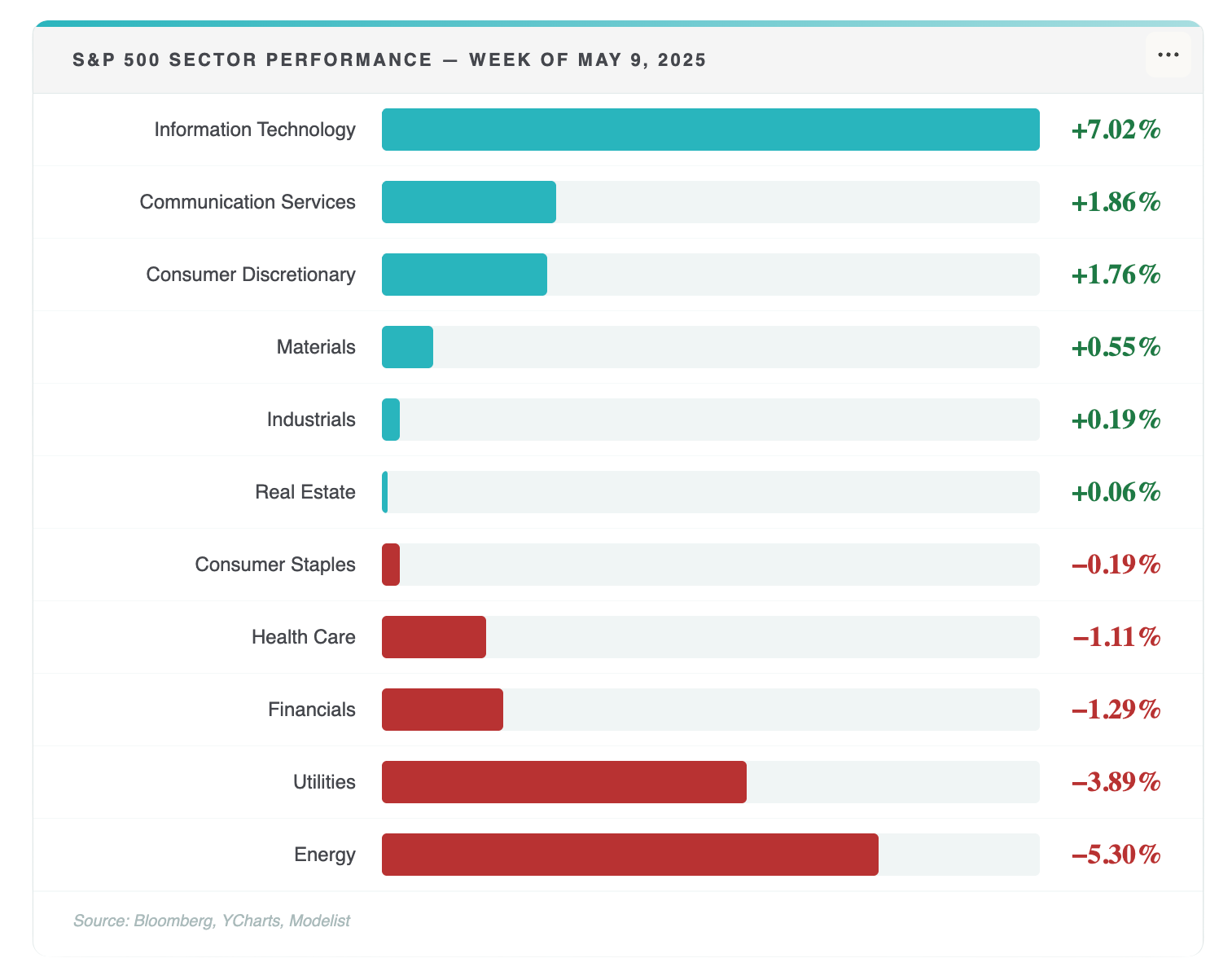
Technology was the clear story of the week, finishing up over 7%. Energy was the other side of that coin, dropping 5.30% as oil prices fell sharply — a reflection of ongoing tension in the Middle East working its way through commodity markets. Utilities also fell 3.89%, which tends to happen when investor anxiety eases and money rotates back toward growth. Overseas, international markets had a solid week, with Emerging Markets up 6.90%, driven largely by strength in South Korea and Taiwan.
Things We're Watching
1. Markets Are at New Highs — but Not Everything Is Participating
Stocks hit record territory again this week, led by technology and companies tied to AI. That's genuinely good news. But it's worth noting that the strength is still concentrated in a relatively small part of the market. The bigger question heading into the next few weeks is whether that strength starts to spread — whether companies outside of tech begin reporting strong enough earnings to justify where the broader market is trading. If it does, this rally has more room to run. If it doesn't, the market is leaning on a narrow foundation. We'll know more as earnings season continues to unfold.
2. The Economy Is Holding Up — and That's a Mixed Signal
April's jobs report came in much stronger than expected — 115,000 jobs added versus a forecast of 65,000, with unemployment steady at 4.3%. For most people, a healthy job market is straightforwardly good news, and in many ways it is. But for retirees and people approaching retirement, it also means the Federal Reserve is in less of a hurry to lower interest rates. Rates affect a lot of things that matter in retirement — what bonds pay, what guaranteed income costs, what cash earns sitting on the sideline. The short version: a strong economy is good, but it also means the interest rate environment may stay where it is longer than some had hoped.
3. Oil Prices Fell — but Next Week's Inflation Report Is the One to Watch
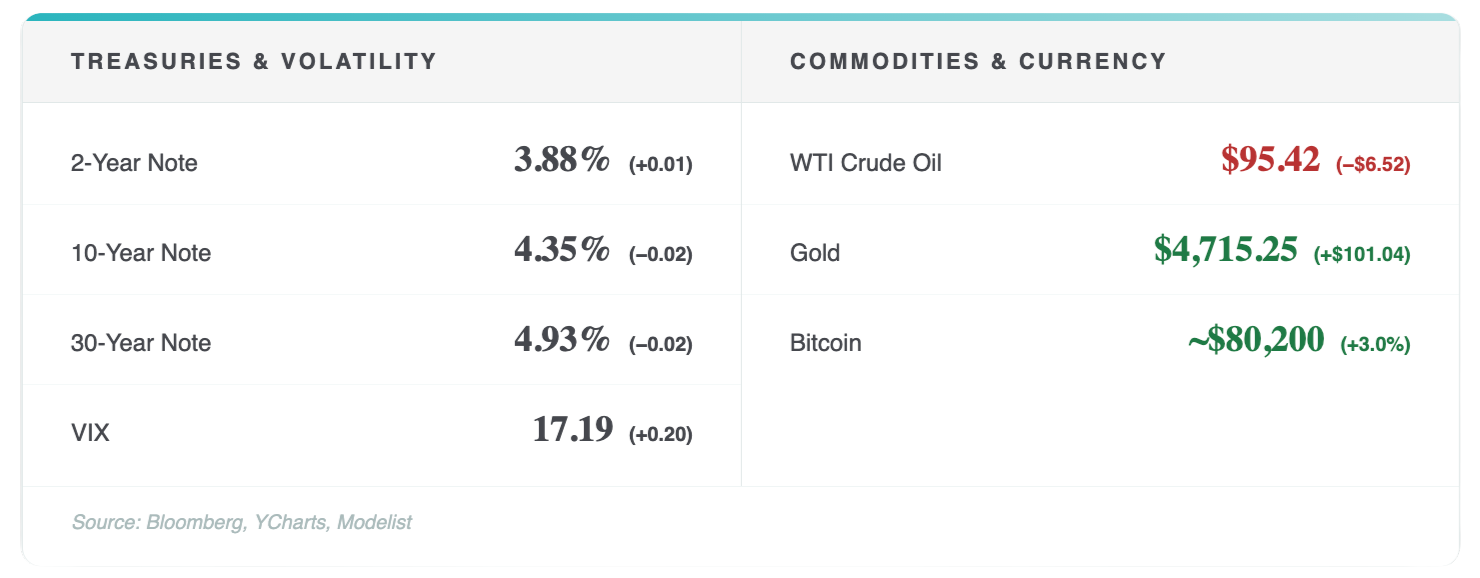
Crude oil dropped $6.52 this week to close at $95.42, which at first glance looks like welcome relief. But oil has been swinging in both directions, driven by what's happening in the Middle East. Energy prices have a way of flowing through into the cost of everyday goods — and that's exactly what next Tuesday's inflation report will start to reveal. If prices are rising faster than expected, it changes the picture for interest rates and, by extension, for retirement income planning. It's the most important number of the coming week, and we'll be watching it closely.
Want the Full Picture?
For a deeper look at this week's data — sector-level performance, fixed income detail, top and bottom S&P 500 stocks, and the full economic calendar — the complete report is available below.
View Full Weekly Market Report →
What This Means for Your Retirement Plan
Relief rallies feel like resolution. They rarely are. This week's gains were real, but the inflation story isn't settled, the rate picture is still in flux, and energy prices are still moving on headlines. The CRAve Life Advisory Process™ is built for exactly this — not just the weeks where everything goes up, but the ones where the headline number and the underlying details are telling two different stories. For clients, nothing about this week changes your plan. That's not reassurance for its own sake. That's the whole point of building it the way we did.
For those just getting to know us — if you've been navigating this market without a coordinated approach that connects your investments, income timing, and tax strategy, this is a good week to start that conversation.
Schedule a 20-Minute Due-Diligence Q&A Call →