
The Bond Market Repriced Your Income Last Week. The Stock Market Got the Headlines.
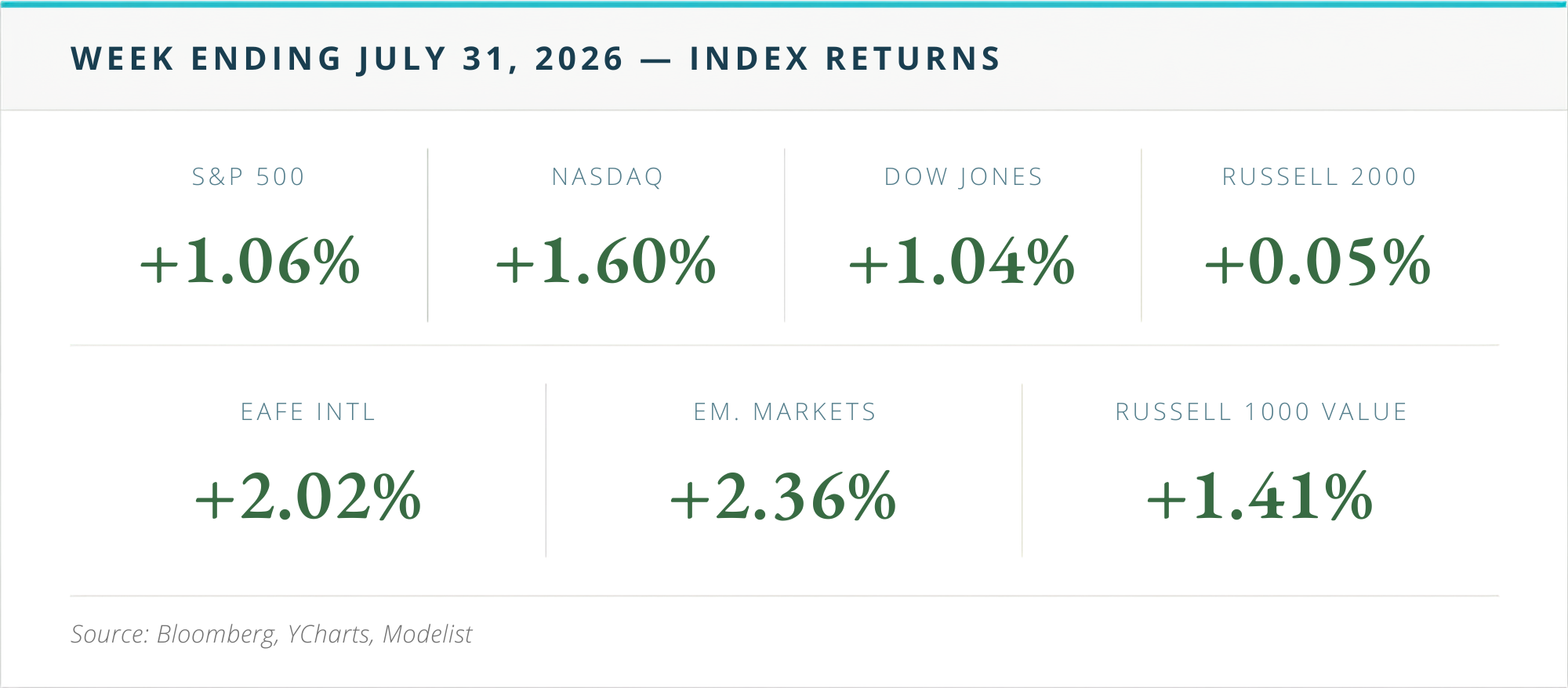
Seven of the S&P 500's eleven sectors lost ground last week. The index still finished up 1.06%. That gap is the story.
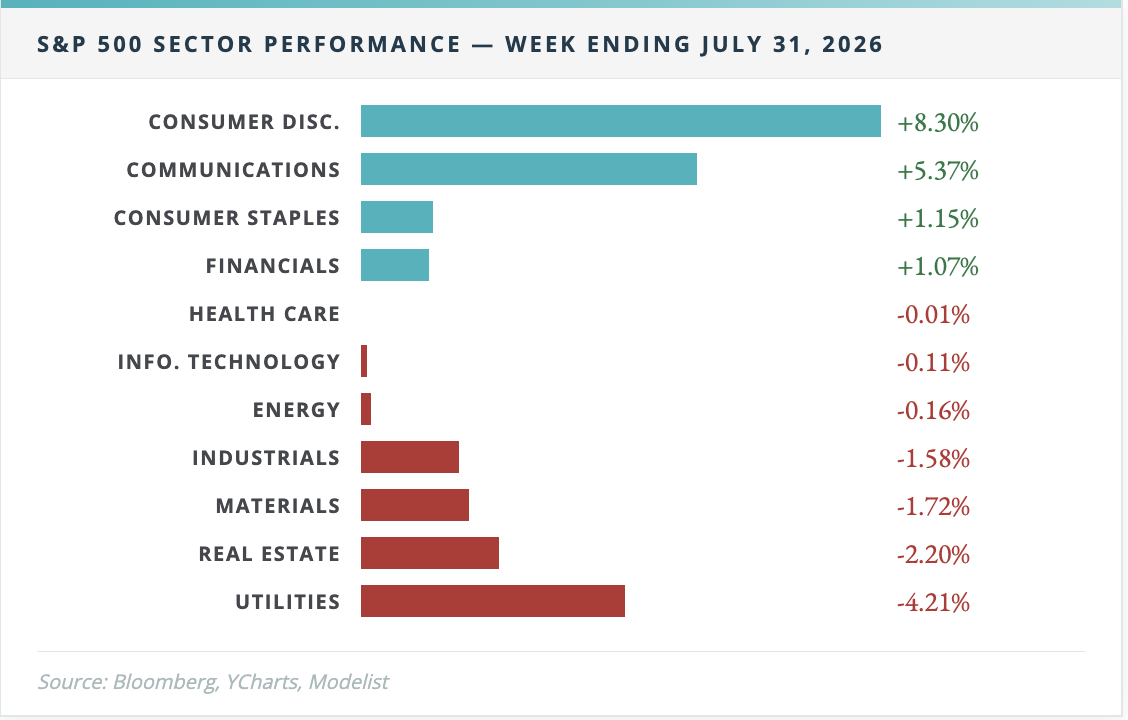
The entire weekly gain came from two places. Consumer Discretionary rose 8.30% and Communication Services rose 5.37%, both carried by mega-cap earnings that landed well after an AI-driven chip selloff pushed the Nasdaq toward correction territory midweek. Take those two sectors out and the rest of the index was slightly negative on the week. The headline number is accurate. It is also describing a market that two earnings reports rescued.
Breadth was thin at home and better abroad. The Russell 2000 finished up 0.05%, essentially unchanged. Developed international markets gained 2.02% on a broad rise across the large European exchanges, and emerging markets gained 2.36%. The narrowest market last week was the American one.
The Money Came Out of the Income Sectors
The sectors that fell were not a random assortment. Utilities lost 4.21%, the worst performer of the week. Real estate fell 2.20%. Materials fell 1.72% and Industrials fell 1.58%. Utilities and real estate are the two sectors most often held for dividend income and steadier price behavior, and they were the two that gave up the most.
Information Technology, the sector that produced the week's scariest headlines, finished down 0.11%. Health Care finished down 0.01%. The damage was not where the news was.
The Long End Did the Damage
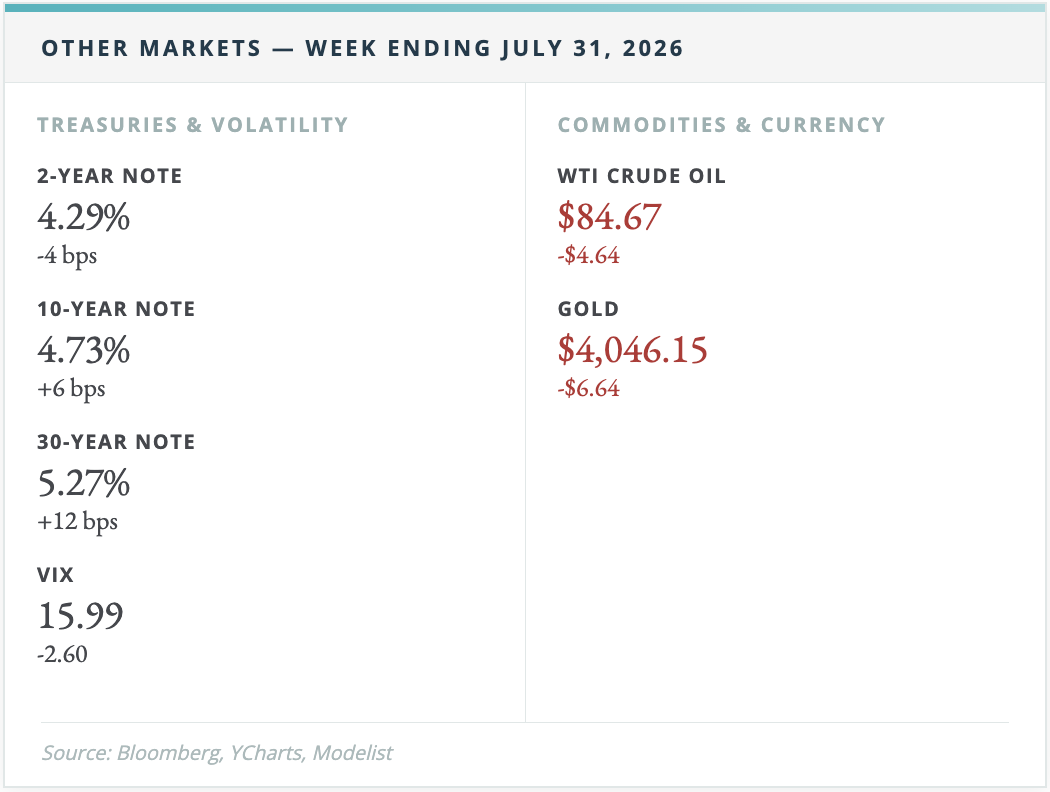
The reason sits in the Treasury market. The 30-year yield rose 12 basis points to 5.27%, its highest level in almost 20 years. The 2-year yield fell 4 basis points to 4.29%. That combination, the short end easing while the long end climbs, is the market pricing inflation risk further out on the curve rather than closer in.
The Fed held rates steady on Wednesday, but three members voted to raise, and odds of a September increase moved to roughly 72%. Three dissents changes what the bond market has to plan for, and it repriced accordingly.
When the long end reprices, everything valued against it reprices too. A utility stock, a REIT, and a long-duration bond all compete for the same dollar as a 30-year Treasury, and that Treasury just became 12 basis points more attractive. That is why the income sectors led the decline in a week the index closed higher.
The VIX fell 2.60 to finish at 15.99 over the same five days. Equity investors were pricing less near-term risk in the same week the long bond reached its highest yield since the mid-2000s. Those two signals point in opposite directions, and the bond market is the one with the longer memory of inflation.
The economic data gave neither side of the Fed's debate much to work with. Durable goods, the Conference Board consumer confidence reading, and the PCE income and spending figures all came in below forecast, while the inflation prints landed on expectations. Friday's payrolls and unemployment numbers now carry more weight than usual, because the Committee is offering less guidance about what comes next.
Want the Full Picture?
For the complete index returns, all 11 sector breakdowns, treasury yields, and commodities data, view the full report below.
View Full Weekly Market Report →
What This Means for Your Retirement Plan
If part of your income comes from dividend-paying sectors and part comes from bonds, last week moved both at once, and a 1.06% headline will not show you that. The repricing landed on the portion of the portfolio built to be dependable, which is the portion most people never think to check after an up week. The Bucket Plan® is built around that exact distinction: the money you need in the next several years is held separately from the money exposed to a 30-year yield at levels it hasn't reached since the mid-2000s, so a week like this changes the statement without changing the income.
If you aren't certain which part of your portfolio is doing which job, that is worth knowing before the next repricing rather than after it. A retirement plan should be able to answer that question in specific dollars and specific years, not in general reassurance.
Schedule a 20-Minute Due-Diligence Q&A Call →