
The Inflation Data Confirmed What Gold Priced Last Week. Gold Fell $148 Anyway.
Last week this column ended with a specific test. Gold and crude had jumped on what looked like a repricing of the dollar's purchasing power, and Wednesday's PCE report would show whether the market had read something real or had simply positioned ahead of it.
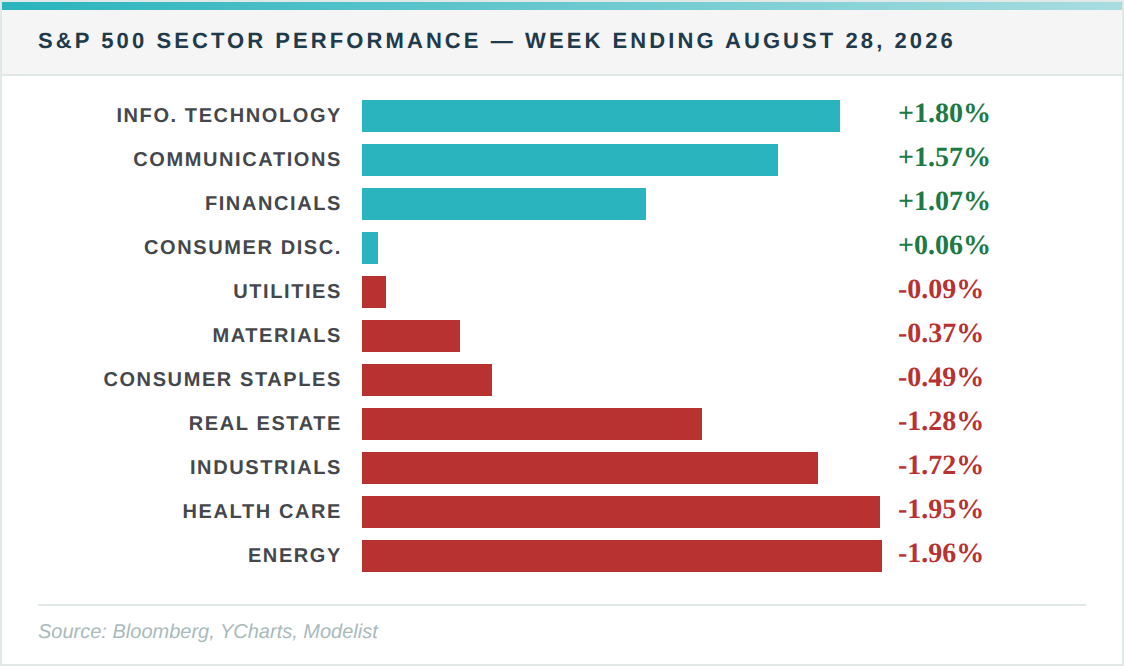
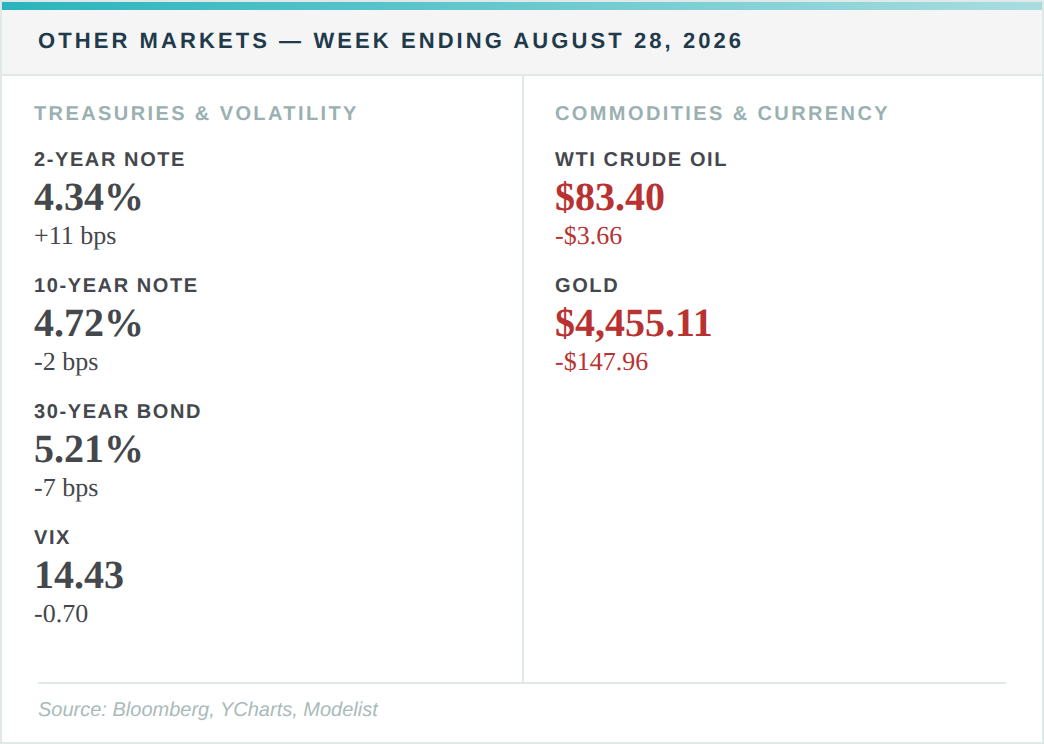
The report came in above forecast at the headline level, with core in line. Gold then gave back $147.96 an ounce. Crude gave back $3.66 a barrel. Energy finished last among the eleven S&P 500 sectors at -1.96%.
The inflation showed up and the inflation assets fell. That is neither of the two outcomes laid out here a week ago, and the reason it happened is the most useful thing markets offered last week.
The Index Was Four Sectors Wide
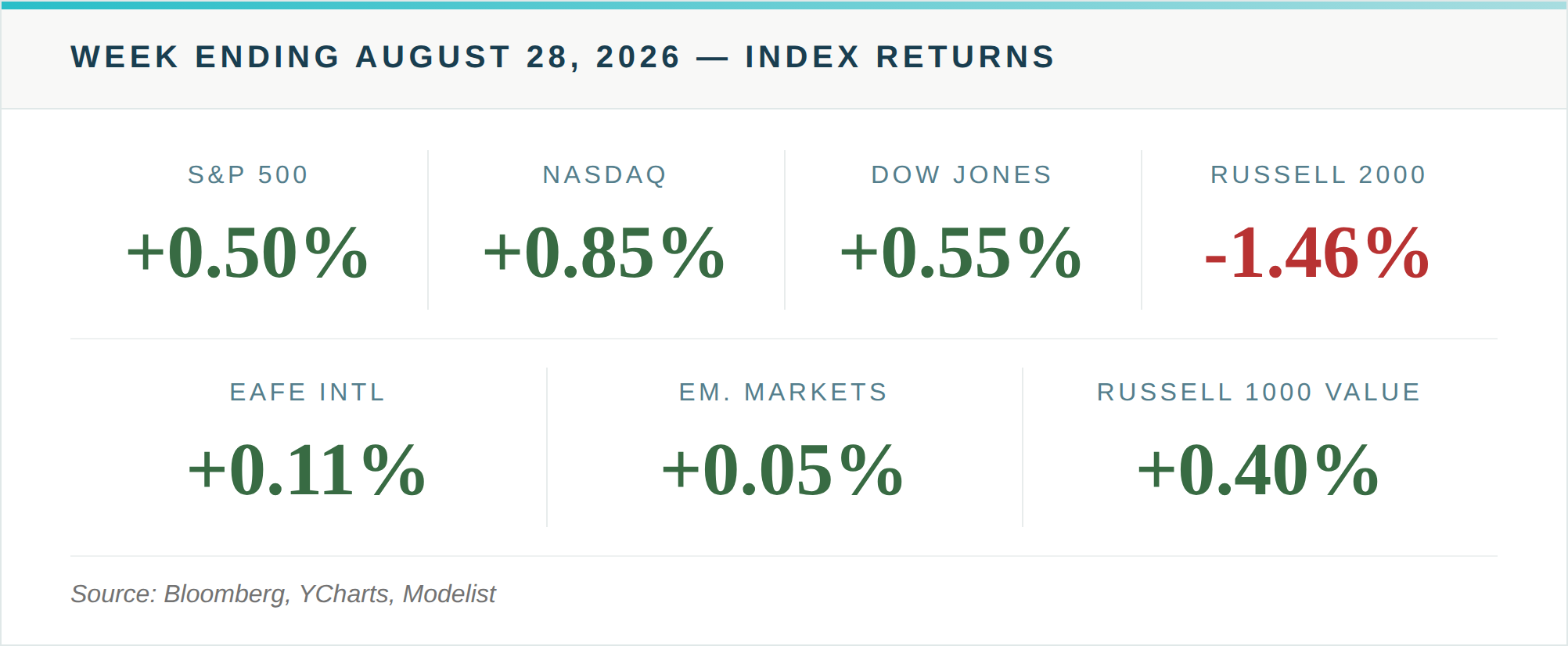
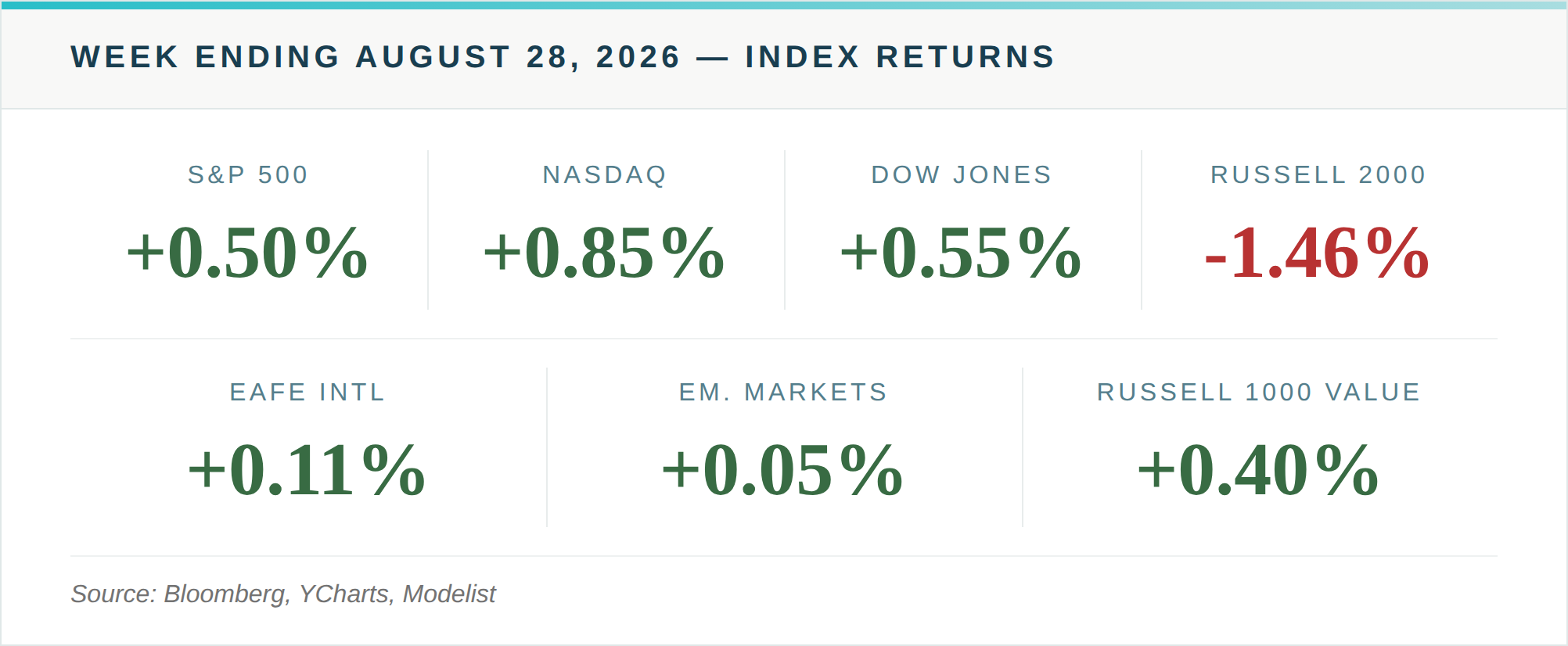
The headline numbers say almost nothing. The S&P 500 rose 0.50%, the Dow 0.55%, the Nasdaq 0.85% — the shape of an agreeable, forgettable week.
Underneath, seven of the eleven sectors finished lower. The advance came almost entirely from Information Technology (+1.80%) and Communications (+1.57%), the two largest weights in the index, with Financials (+1.07%) supplying most of the rest. Step outside large caps and the week turns negative outright: the Russell 2000 fell 1.46%, the Russell Midcap 1.03%. A genuinely diversified equity sleeve had a down week while the headline said up. The VIX closed at 14.43, down 0.70 — not stress, just narrow leadership, which is a different condition and easier to miss.
The Market Repriced the Response, Not the Data
So why did the hedge fall on the news it was built for?
Because the market was not pricing more inflation. It was pricing more Fed.
The Treasury curve makes this legible. The 2-year yield rose 11 basis points to 4.34% while the 10-year eased 2 basis points to 4.72% and the 30-year eased 7 to 5.21%. Short rates up, long rates down — the shape of a market expecting tighter policy soon and not expecting the inflation itself to persist out to the long end. Fed Chair Warsh's Jackson Hole remarks anchoring on the 2% target pushed the same way.
Gold does not track inflation. It tracks real short-term rates, and a central bank leaning hawkish raises them. Gold remains sharply higher on the year, so the point is not that it stopped working — it is that last week the policy response mattered more than the price data that triggered it. Energy fell with crude for a related reason: the growth cost of tighter policy reached the price faster than any inflation pass-through could.
Which returns us to the test. Last week's move was information, not positioning; the data confirmed it. But the asset still reversed, because a hedge pays off on the outcome and the market had moved on to trading the reaction. Those are two different things, and only one of them was in the portfolio.
What Would Have to Stay True
The market is now carrying two assumptions at once: that policy tightens from here, and that the economy absorbs it. Friday's August payrolls report is the first real test of the second, with recent months already revised lower and consumer sentiment softer again in August. A weak print puts the growth assumption under pressure. A strong one gives the short end more to price.
Want the Full Picture?
For the complete index returns, all 11 sector breakdowns, treasury yields, and commodities data, view the full report below. View Full Weekly Market Report →
What This Means for Your Retirement Plan
A plan that needed last week's inflation call to be right in order to work was never a plan. The call was right — the data confirmed what gold and crude priced the week before — and the position lost money anyway, because the market spent the week trading the Fed's response rather than the inflation. That gap between being correct and being paid is ordinary, not unusual, and it is the practical case for the CRAve Life Advisory Process℠: income needs, tax sequencing, and investment structure are decided in relation to one another and revisited as conditions change, rather than each set once against a forecast and left alone. The plan is built so that being wrong about which of two reasonable readings the market adopts in a given week costs you nothing that matters.
If your portfolio is organized around a single question — what did it do this week — a week like this one is genuinely hard to read, because the answer was mixed while the things a retirement plan actually depends on moved in a direction the headline never mentioned. That gap is worth a conversation.
Schedule a 20-Minute Due-Diligence Q&A Call →