

The SpaceX IPO and the Psychology of FOMO: What Every Investor Should Know Before They Act
The SpaceX IPO is here — and if your phone has been buzzing with questions from friends, family, or your own inner voice asking "should I get in?", you're not alone.
That feeling has a name. And understanding it might be the most important financial move you make right now.
Watch: The Behavioral Finance Case on Mega IPOs
We recently came across this conversation between Ben Vasky, Manager of Investment Strategy at Orion, and Dr. Daniel Crosby, Orion's Chief Behavioral Officer and author of The Laws of Wealth. It's one of the most grounded, practical takes we've seen on what's happening in the market right now — and why moments like this are exactly when good advising matters most.
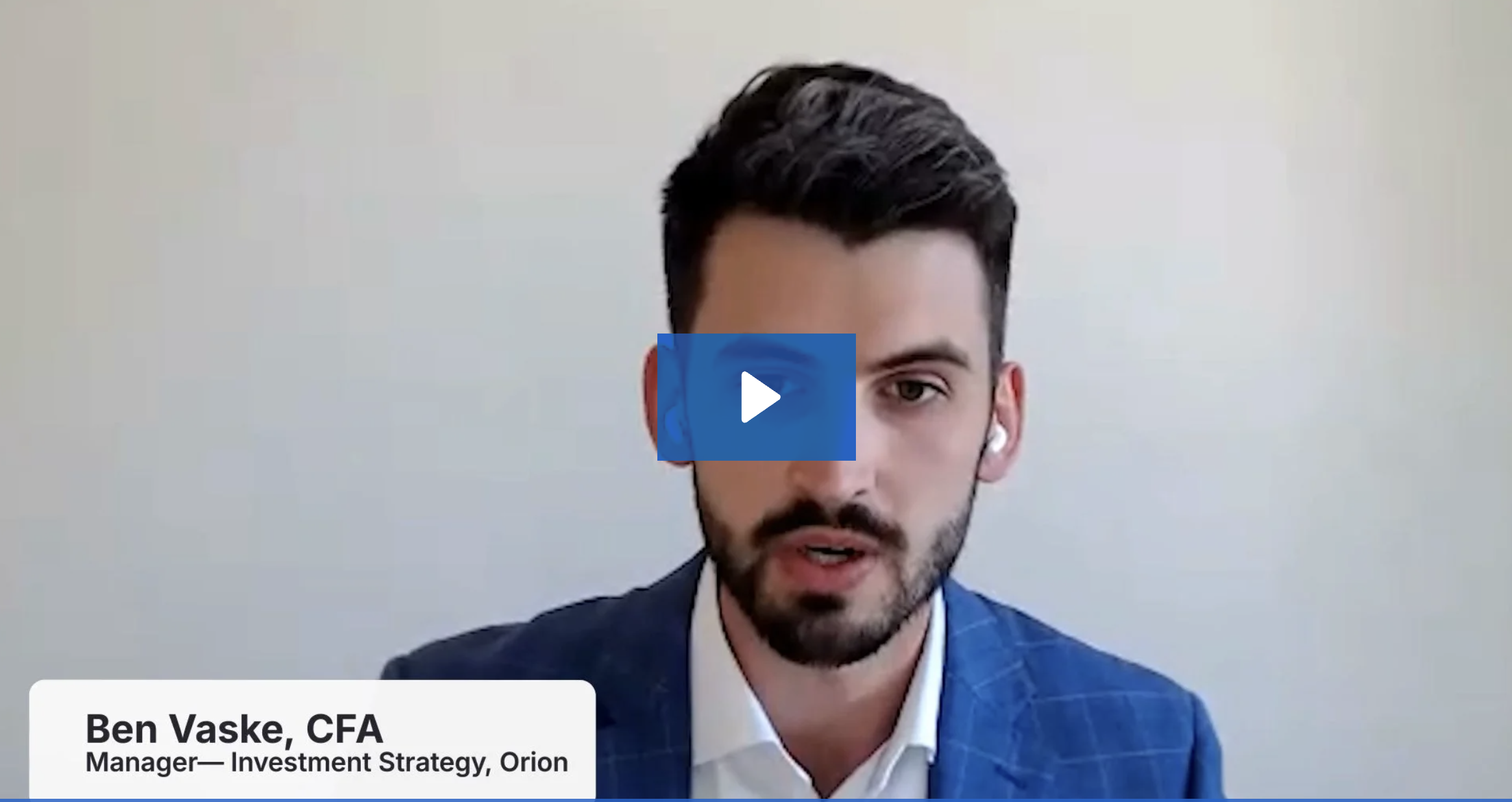
Source: Orion | Ben Vasky & Dr. Daniel Crosby
We've summarized the key takeaways below for those who prefer to read — but we recommend watching the full conversation.
Two Biases That Are Running the Room Right Now
Dr. Crosby identifies two cognitive biases dominating investor behavior in this moment. Both are worth knowing by name.
1. FOMO — Fear of Missing Out
This one's at the top of the list for good reason. When other people appear to be getting wealthy from an investment and you're on the sidelines, brain scans show the emotional response is neurologically identical to being left out of a social group — picked last at kickball, not invited to the party. We are wired to want to belong. When money is on the line, that wiring gets loud.
And as Dr. Crosby notes, FOMO isn't just a retail investor problem. It shows up in institutional portfolios too — it just wears different clothes. A retail investor says "I don't want to miss out." An institutional investor says "I can't have tracking error." The emotional root is the same: we don't want to be on the outside looking in.
2. Representativeness — The "Next Apple" Trap
The second bias is what behavioral experts call representativeness. When SpaceX comes up in conversation, minds immediately jump to Apple, Amazon, Tesla — the IPOs that turned early investors into legends. It feels natural to draw the comparison. But as Dr. Crosby points out, those are imperfect and often misleading parallels. The financial history books are full of transformative, world-changing technologies that were terrible investments. Flight changed civilization. Airlines have been a notoriously poor place to put money. Impact and investment returns are not the same question.
The Trap: Answering the Easier Question
Here's the insight from Dr. Crosby that we think is most worth sitting with.
When faced with a genuinely complex decision — like whether a company is a good investment — our brains tend to quietly substitute a simpler question. For a mega IPO like SpaceX, the question people are actually answering is: Will this company change the world?
That's a much easier question than: Is this a good investment at this price, for my plan, at this stage of my life?
And in the case of SpaceX, OpenAI, or Anthropic — the answer to the first question may well be yes. Their impact is hard to argue with. But that doesn't answer the second question. Answering whether something is a good investment requires looking at valuation, projections, time horizon, risk tolerance, portfolio fit, and a decade or more of variables that don't get discussed on the news.
Three Questions That Slow Down the Right Way
Rather than making a stock call, Dr. Crosby offers a framework any investor can use — a set of questions designed to engage slower, more deliberate thinking before acting.
Question 1: What evidence would change your mind?
If your honest answer is "nothing" — no data, no valuation, no news could talk you out of it — that's not an investment thesis. That's an emotional decision. And emotional decisions deserve a different conversation.
Question 2: How would you feel if this position were down 50% one year from now?
Research cited in The Laws of Wealth shows that the average IPO has underperformed the S&P 500 by roughly 21% in its first three years. That's the average — not the exception. The Teslas and Amazons are memorable precisely because they're rare. If a 50% drawdown in year one would derail your plan or your peace of mind, that's critical information.
Question 3: If you knew nothing about the hype — would this still fit your plan?
Strip away the news cycle, the dinner party conversations, the social media buzz. Looking at this company with fresh eyes: does it actually belong in your financial plan? Does it fit your goals, your timeline, and your risk profile? Or are we creating a one-off opportunity that has nothing to do with where you're trying to go?
What This Means for Our Clients
We are not making a call on SpaceX. That's not our job — and frankly, anyone who tells you with certainty how a newly public company will perform in year one is guessing.
What we can tell you is this: moments like this are exactly when having a plan matters. The role of a good advisor isn't to predict which IPOs win. It's to slow the process down, ask the right questions, and make sure any decision you're considering is connected to your actual financial life — not the narrative of the moment.
If you're getting questions from friends, or if you're asking these questions yourself, we'd welcome the conversation.
→ Schedule Your 20-Minute Due-Diligence Q&A Call