
The Stock Market Sold Off Last Week. The Bond Market Said Something More Important.
The number that mattered most last week wasn't on the equity tape.
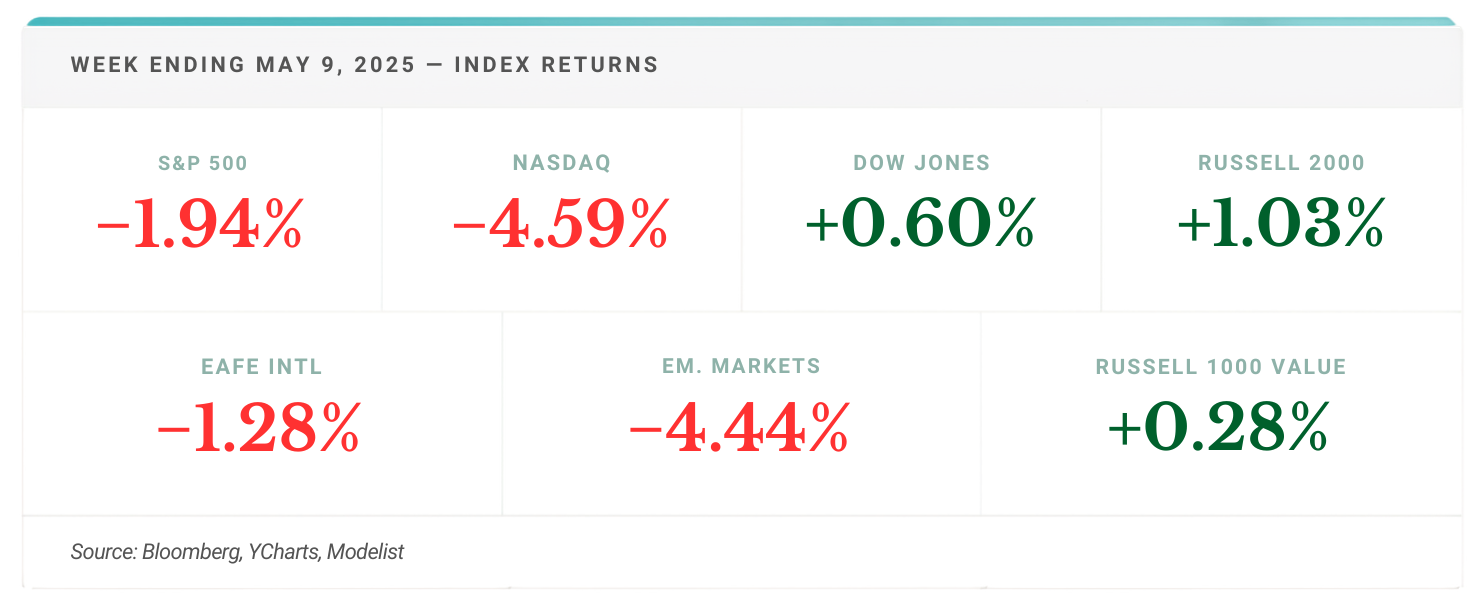
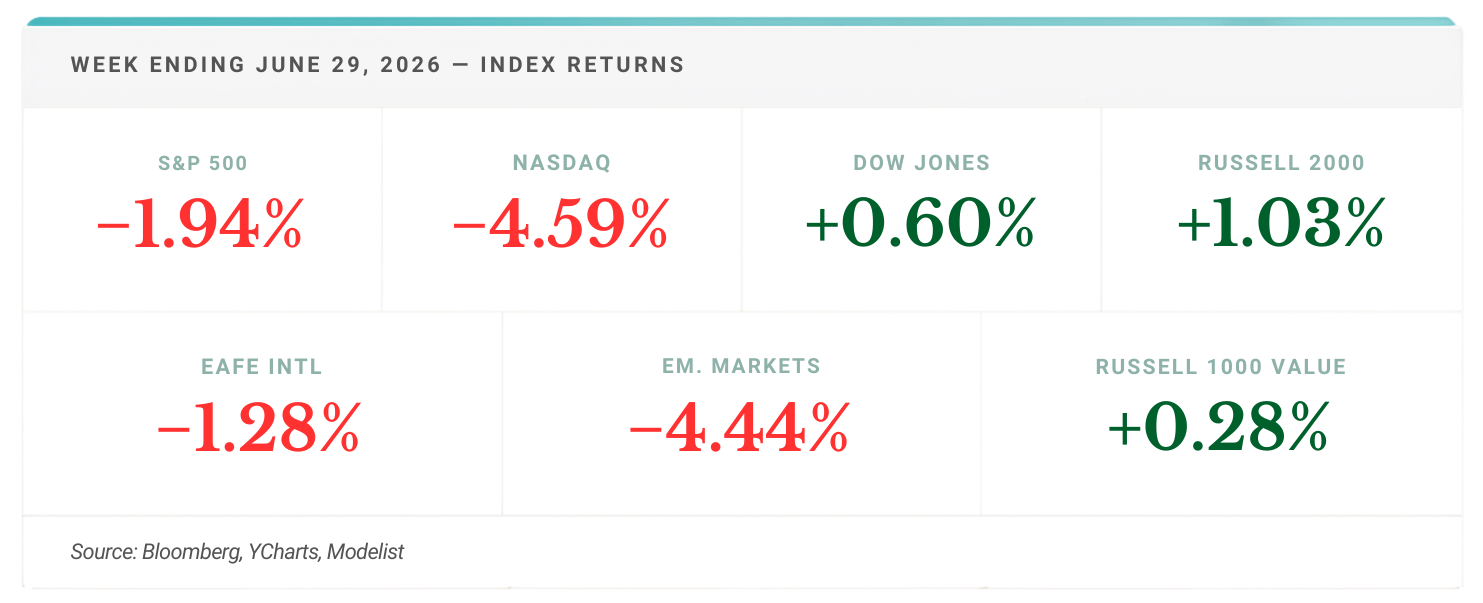
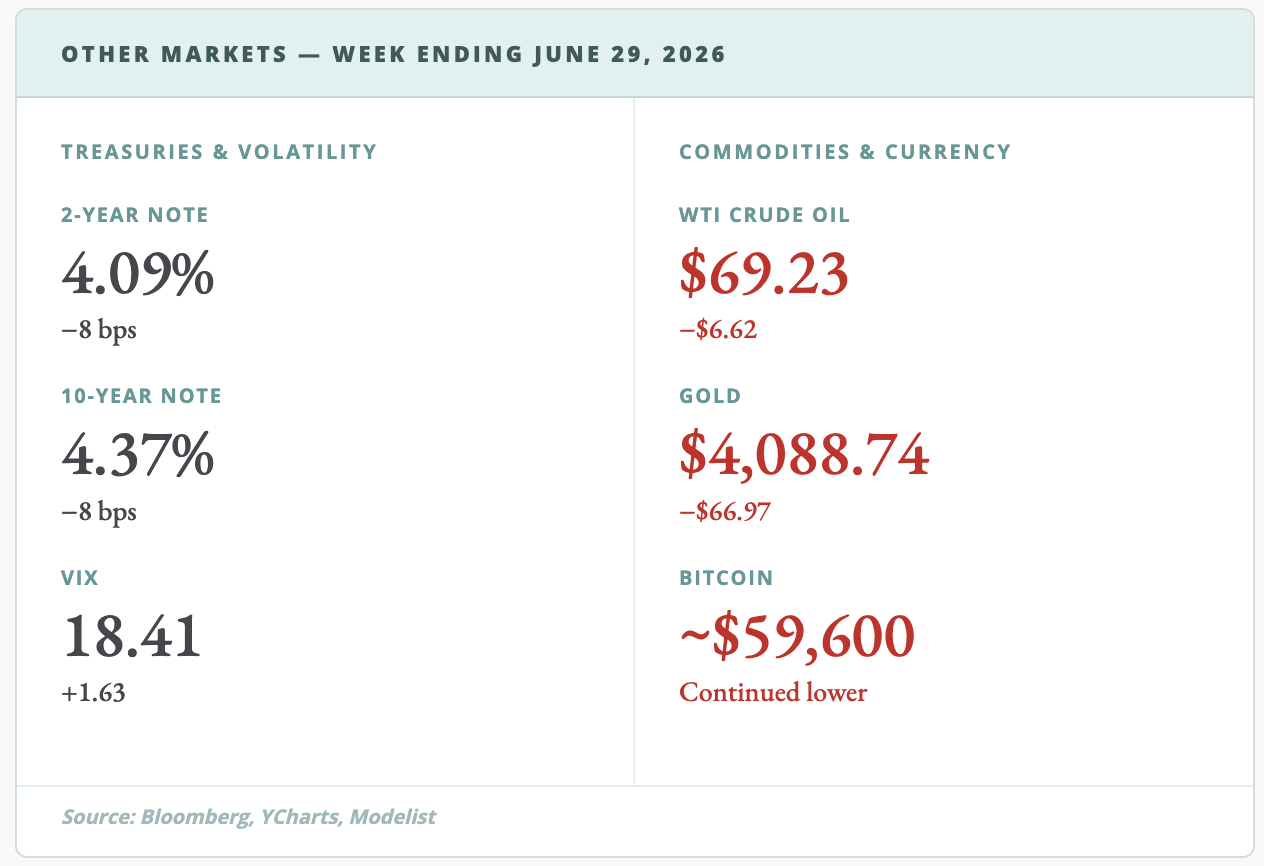
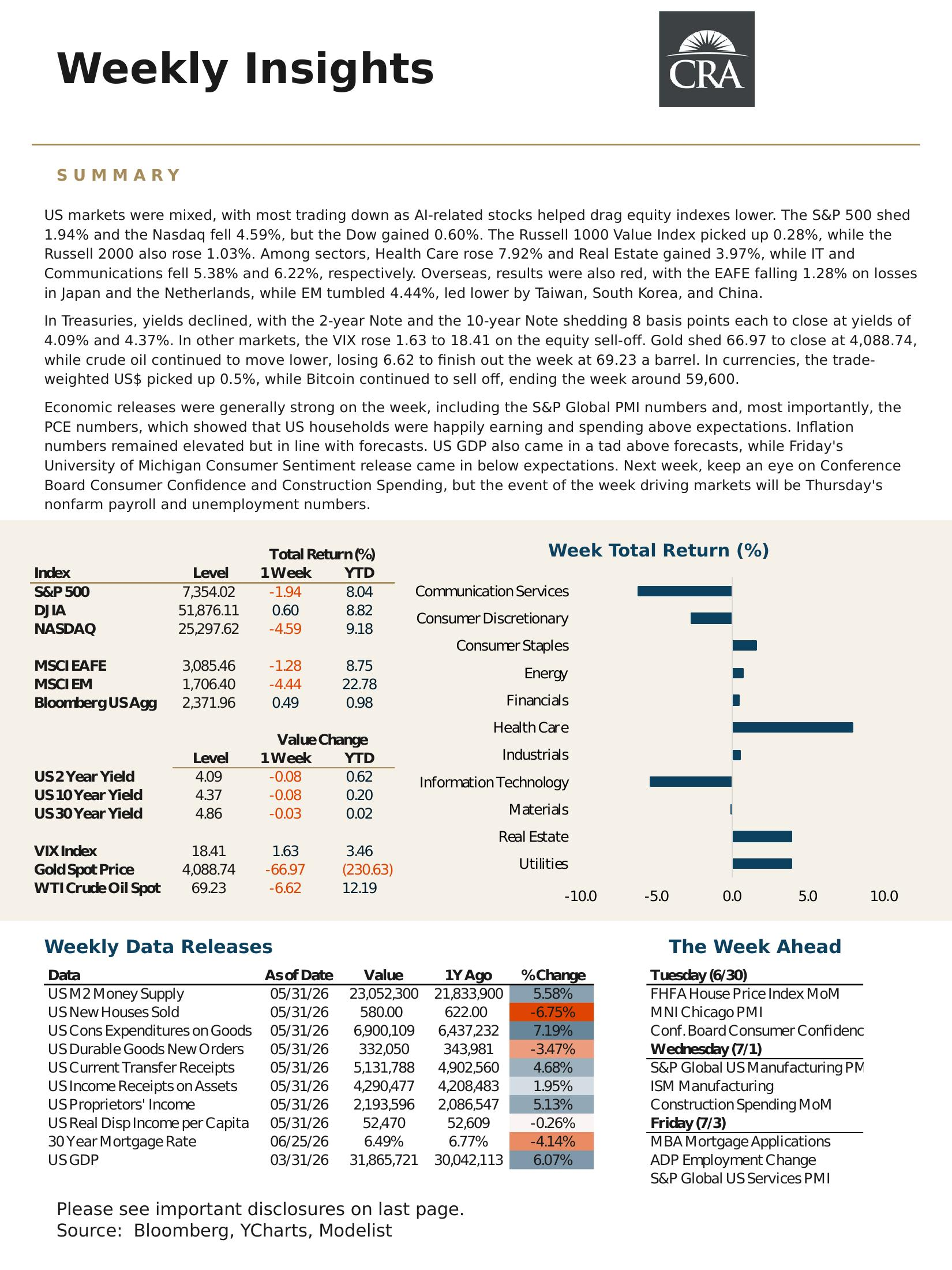
The S&P 500 fell 1.94% and the Nasdaq dropped 4.59% as AI-related names led a sharp selloff in technology. That's the number most people saw. But while equities were falling, Treasury yields were falling too — the 2-year and 10-year each shed 8 basis points, closing at 4.09% and 4.37%. Stocks and bonds moving in the same direction isn't the normal script. When it happens, it usually means the bond market is trying to say something the equity headline is drowning out.
What the Bond Market Is Pricing In
Falling yields alongside an equity selloff typically reflect one of two things: a flight to safety, where investors move out of stocks and into Treasuries, or a forward-looking bet that the Fed will need to cut sooner than expected because growth is slowing. Neither reading is alarming on its own. Together, in the same week that PCE came in above expectations and GDP beat forecasts, they create a tension worth paying attention to. The economic data said consumers are earning and spending above expectations. The bond market said it may not last.
The Equity Split Tells the Same Story
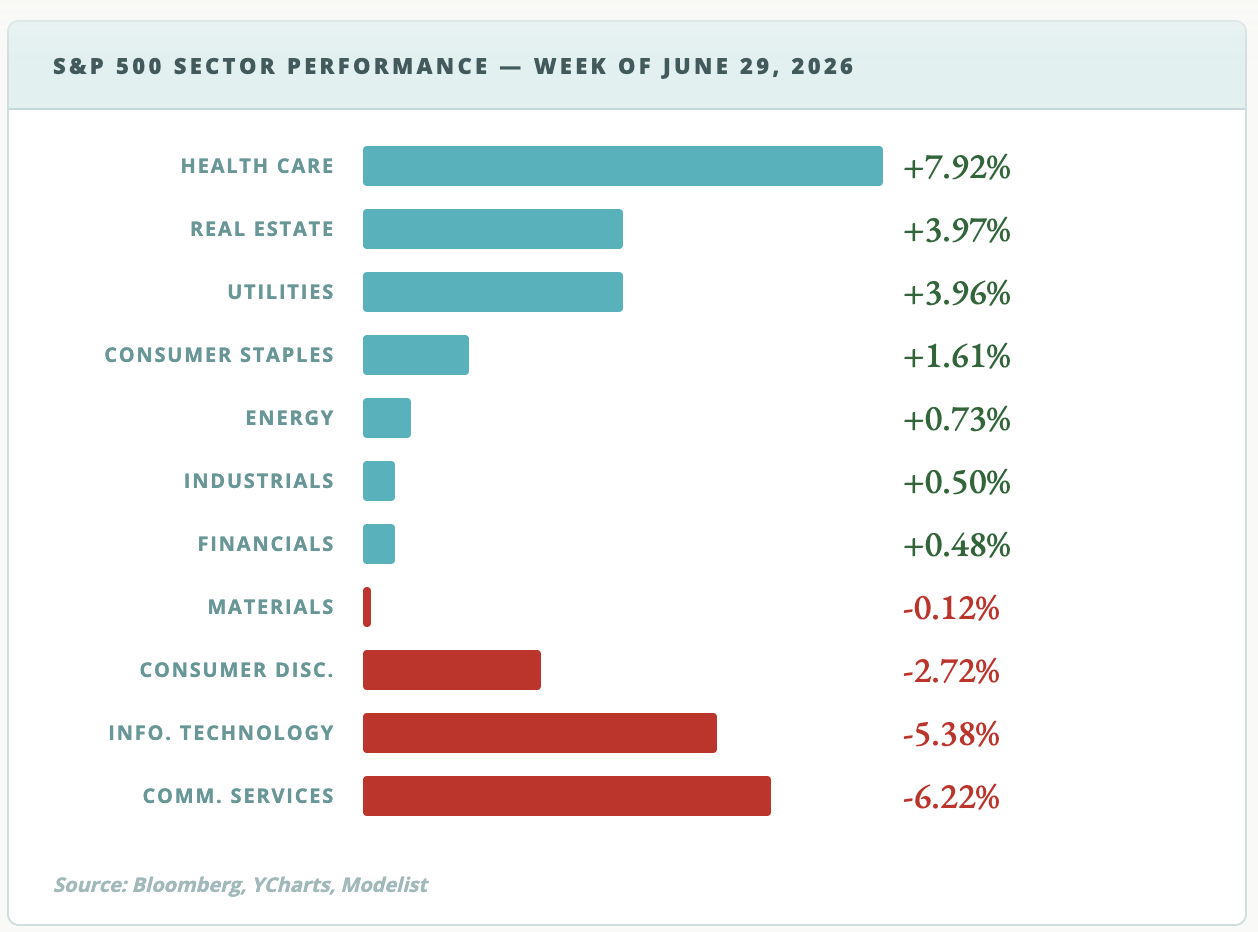
The Dow gained 0.60%, the Russell 1000 Value rose 0.28%, and small caps added 1.03% — while the Nasdaq fell more than four and a half percent. This isn't a market in broad retreat. It's a market repricing a specific trade: AI-driven growth expectations that got ahead of earnings reality. Health Care surged 7.92%. Real Estate gained 3.97%. Those are the sectors that benefit when rates fall and growth expectations moderate — which is exactly what the bond market was signaling simultaneously. The two moves are telling the same story from different angles.
The VIX ticked up to 18.41, elevated but well below levels that indicate real stress. Crude oil continued lower, closing around $69.23, which takes some pressure off the inflation picture. Internationally, the EAFE fell 1.28% and emerging markets dropped 4.44%, led lower by Taiwan, South Korea, and China — a reminder that the AI repricing isn't contained to U.S. markets.
The Test Comes Thursday
The economic backdrop was broadly constructive on the week. PCE came in elevated but in line with forecasts. GDP nudged above estimates. S&P Global PMI held up. The one soft note was Friday's University of Michigan Consumer Sentiment, which disappointed — and sentiment tends to lead spending, so it's the kind of reading the bond market files away even when the headline prints don't shock.
Nonfarm payrolls and unemployment land Thursday and they're the week's central event. A strong jobs number tells you the bond market was reacting to equity noise, not signaling anything structural — growth is intact, yields normalize, and the AI selloff was a sentiment correction. A weak number validates what bonds were pricing: the consumer is softening, the Fed's calculus shifts, and what looked like a tech-specific selloff starts to look like something broader. Same data point, two completely different stories depending on where it lands.
Want the Full Picture?
For the complete index returns, all 11 sector breakdowns, treasury yields, and commodities data, view the full report below.
View Full Weekly Market Report →
What This Means for Your Retirement Plan
For someone in or near retirement, the bond market's message this week matters more than the equity headline — and not just because bonds are part of most retirement portfolios. It matters because the two scenarios Thursday's jobs report could produce have different implications for income, sequence of returns, and the timing of any distribution decisions. A coordinated plan built through the CRAve Life Advisory Process is already stress-tested for both outcomes: the Bucket Plan® isn't structured around calling the next Fed move correctly — it's structured so that near-term income needs don't depend on it. What the bond market flagged this week isn't a reason to act. It's a reason to know your plan was built for the range.
If you're not certain it was — if Thursday's number is the kind of thing that would make you want to call someone — that uncertainty is worth resolving before the data drops.
Schedule a 20-Minute Due-Diligence Q&A Call →