
Treasury Yields Eased Again Last Week. The Buyer for Your House Is Still Paying 7.32%.
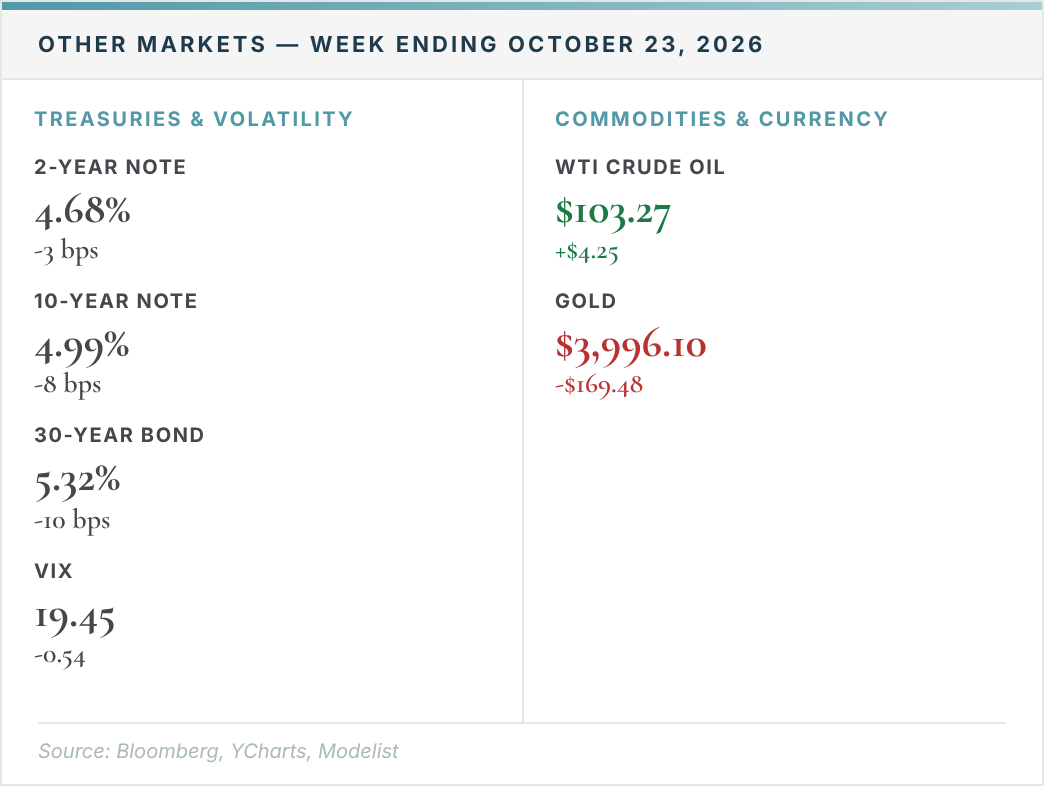
Treasury yields fell for a third straight week last week, and the 10-year closed back under 5%. The rate a home buyer pays tells a different story: the average 30-year mortgage was 7.32% on Thursday, up from 6.17% a year earlier.1 If your retirement plan includes selling a house, the second number is the one that sets your timeline.
What Happened
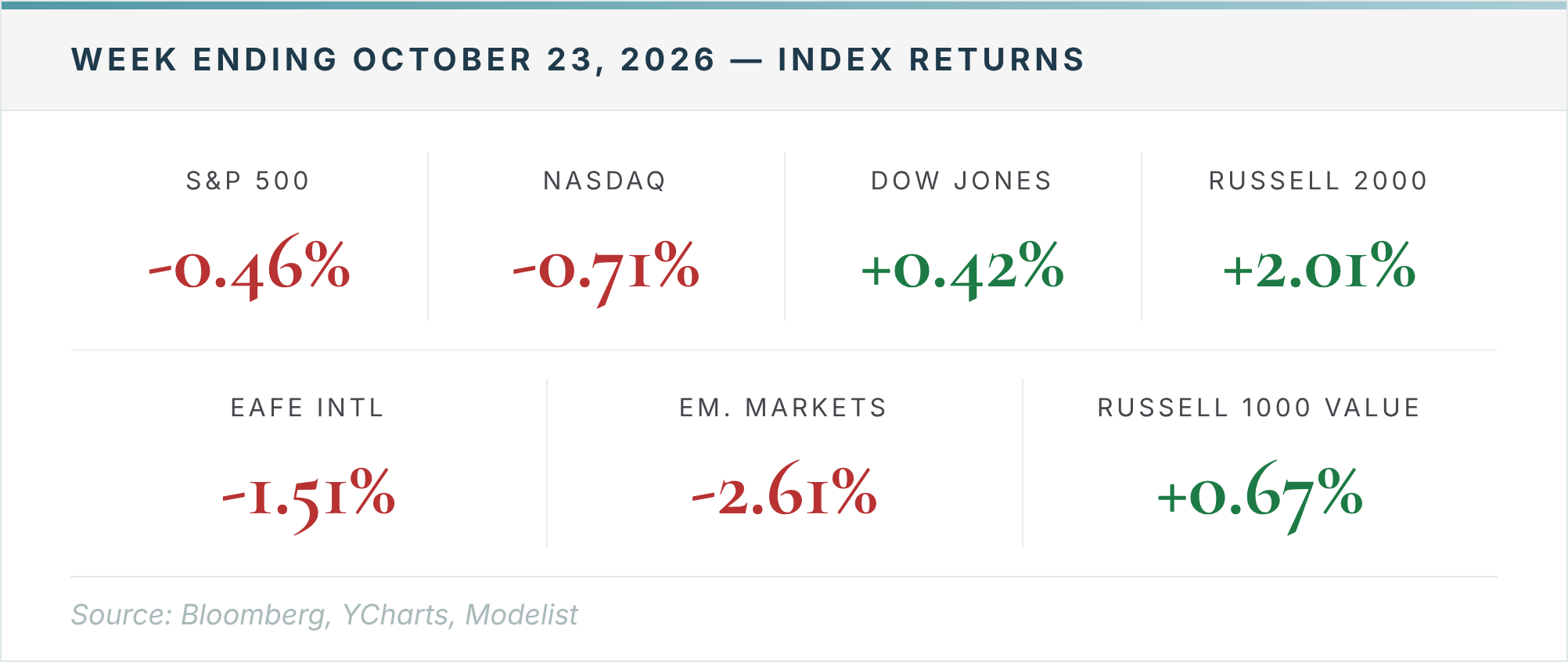
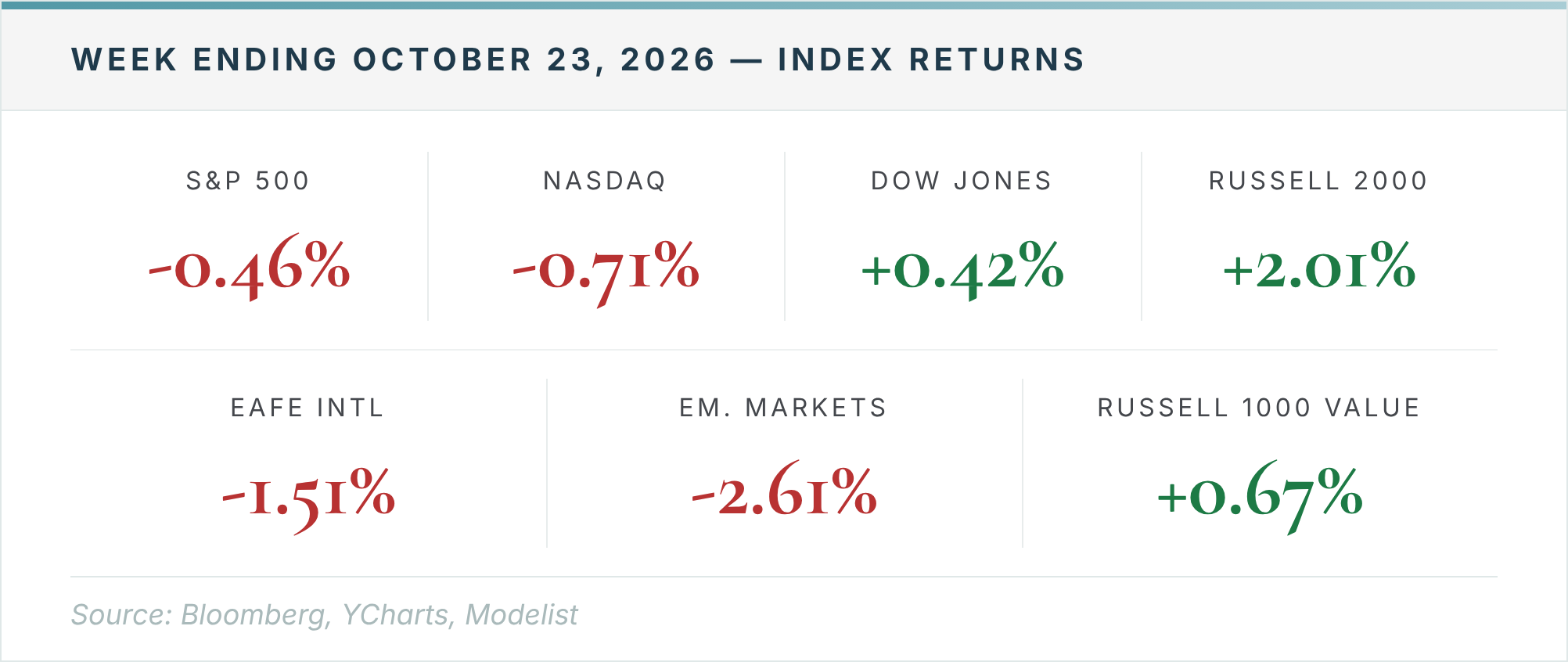
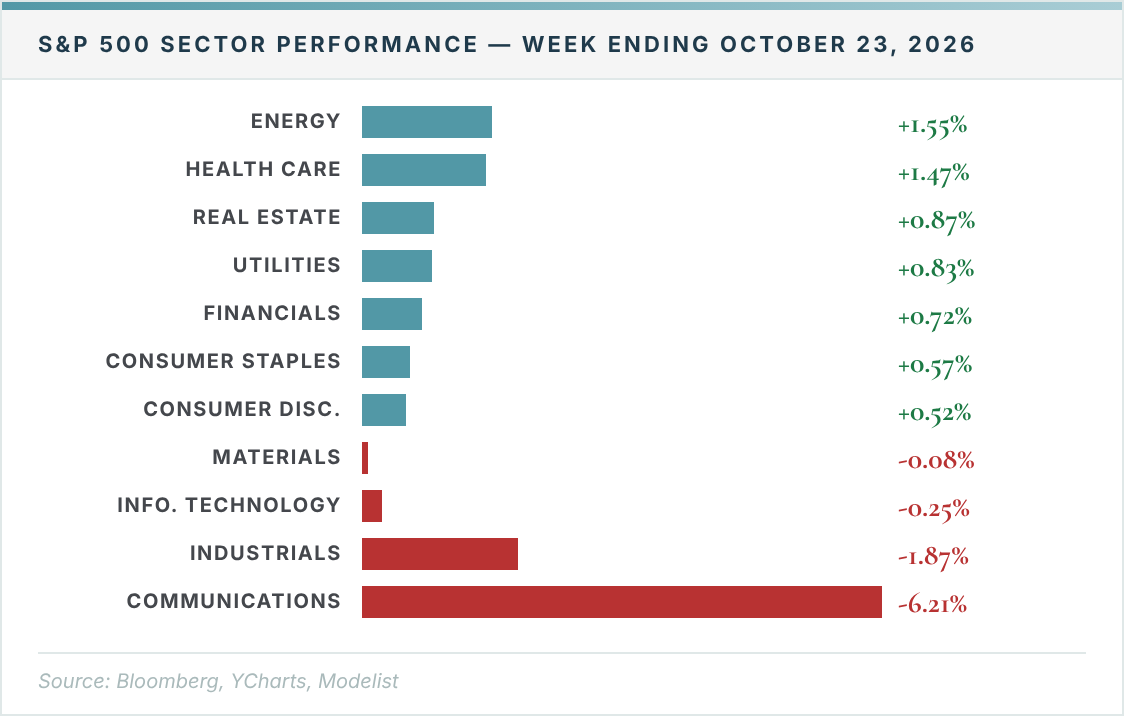
The bond market had a steady week. The 2-year Treasury yield slipped 3 basis points to 4.68%, the 10-year fell 8 to 4.99%, and the 30-year fell 10 to 5.32%.1 Smaller companies gained the most: the Russell 2000 rose 2.01%, and seven of the eleven S&P 500 sectors finished higher.2 The S&P 500 itself slipped 0.46%, largely because Communication Services fell 6.21% during a heavy week of earnings reports.
Housing showed the other side of the week. September housing starts ran 7.43% below a year earlier, and the pending home sales index, which counts contracts signed but not yet closed, was 11.29% lower than a year ago.1 Financing costs are the likely reason. At 7.32%, the 30-year mortgage rate sat 2.33 percentage points above the 10-year Treasury's close for the week and 1.15 points above its own level a year ago.
The gap is concrete for a buyer. On a hypothetical $800,000, 30-year loan, the monthly principal and interest payment comes to about $5,495 at 7.32%, compared with about $4,884 at last year's 6.17%. That is roughly $611 more a month, or about $7,300 a year, for the same house. A buyer who qualifies for less offers less, or waits.
Mortgage rates are priced off longer-term Treasury yields plus a margin lenders charge for their own risk, and that margin moves on its own schedule. Three weeks of easing in Treasuries have not yet shown up in what a buyer pays each month. Last week we wrote that bonds rallied through a 3.7% inflation reading and that next year's income shouldn't depend on that happening again. This week extended the rally, and it showed how slowly a bond rally reaches the person on the other side of a home sale.
What It Means for Your Retirement Plan
Many retirement plans count on a home sale at some point, whether to downsize or to move closer to family. The proceeds depend on a buyer, and most buyers borrow. With signed contracts running 11% below last year, a seller who needs the money by a fixed date has less room to wait for the right offer, and may end up choosing between a lower price and a later date.
The Bucket Plan® is built for that kind of uncertainty. Each asset is assigned to the years it is meant to fund, and the risk it carries is set by that date. Money for the next few years of withdrawals sits in its own segment, in holdings that don't depend on anything selling. Equity in a home fits in the later segments, where the sale can wait for buyers rather than a withdrawal date forcing it. If a withdrawal you're counting on depends on closing a sale by a certain month, that is worth knowing while mortgage rates sit at 7.32%, not after a listing has gone stale.
None of this says when housing will turn, and we don't try to call it. The point is narrower: a plan that needs a specific price by a specific date carries a market risk that rarely appears on a statement, because the house isn't on one. Naming that dependence is part of building the plan, the same as naming which account funds next year's income.
What We're Watching
The FHFA House Price Index on Tuesday, October 27, and the Federal Reserve's interest rate decision on Wednesday, October 28.1
Does Your Plan Depend on When the House Sells?
If you are not getting your questions on this topic answered by your current financial advisor and would like to discuss working with us, you may request a meeting here.
Schedule your 20-Minute Due-Diligence Q&A Conversation