
Two Weeks, Two Opposite Rate Stories, Same Result for Income Sectors
Two weeks ago, rising long-term yields were the reason income-oriented sectors sold off. Last week yields fell across the entire curve, and those same sectors finished in the red again. When the explanation disappears and the result doesn't, the explanation was never the whole story.
The Rally Had a Premise
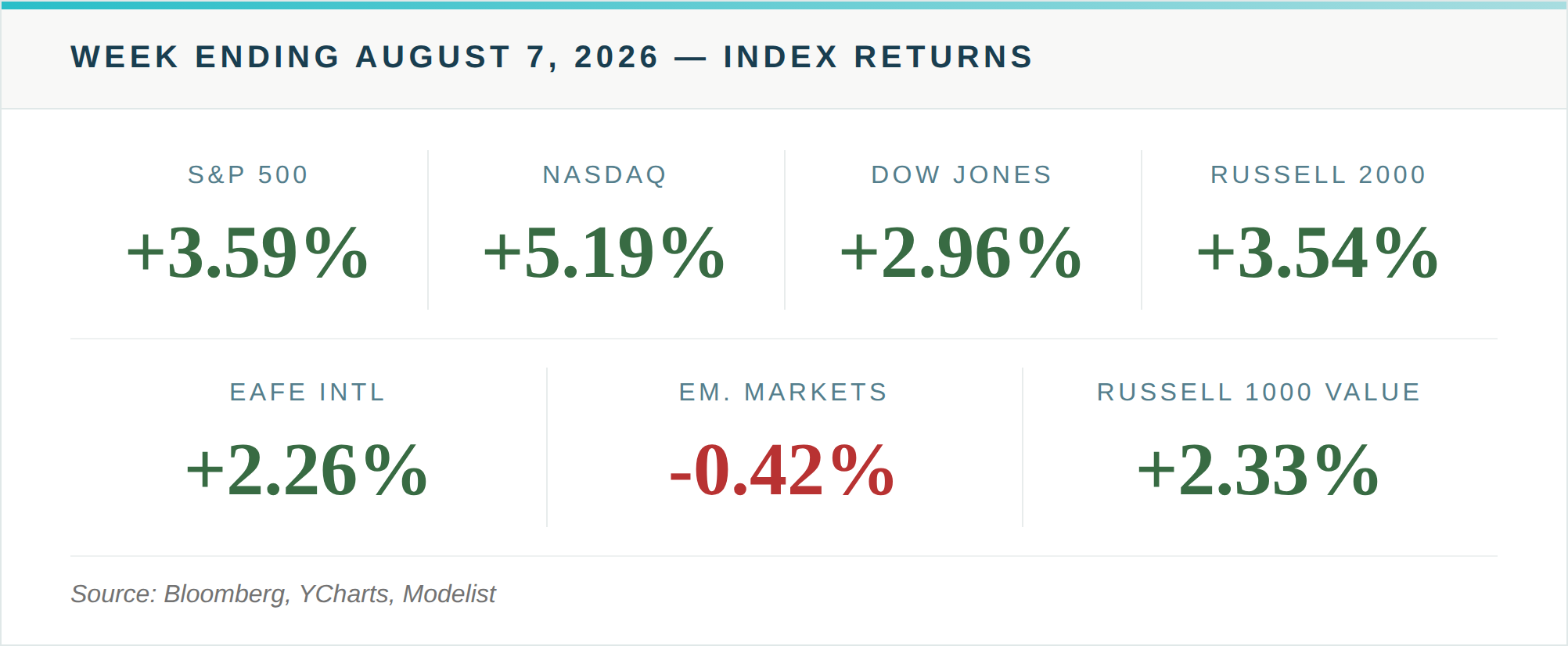
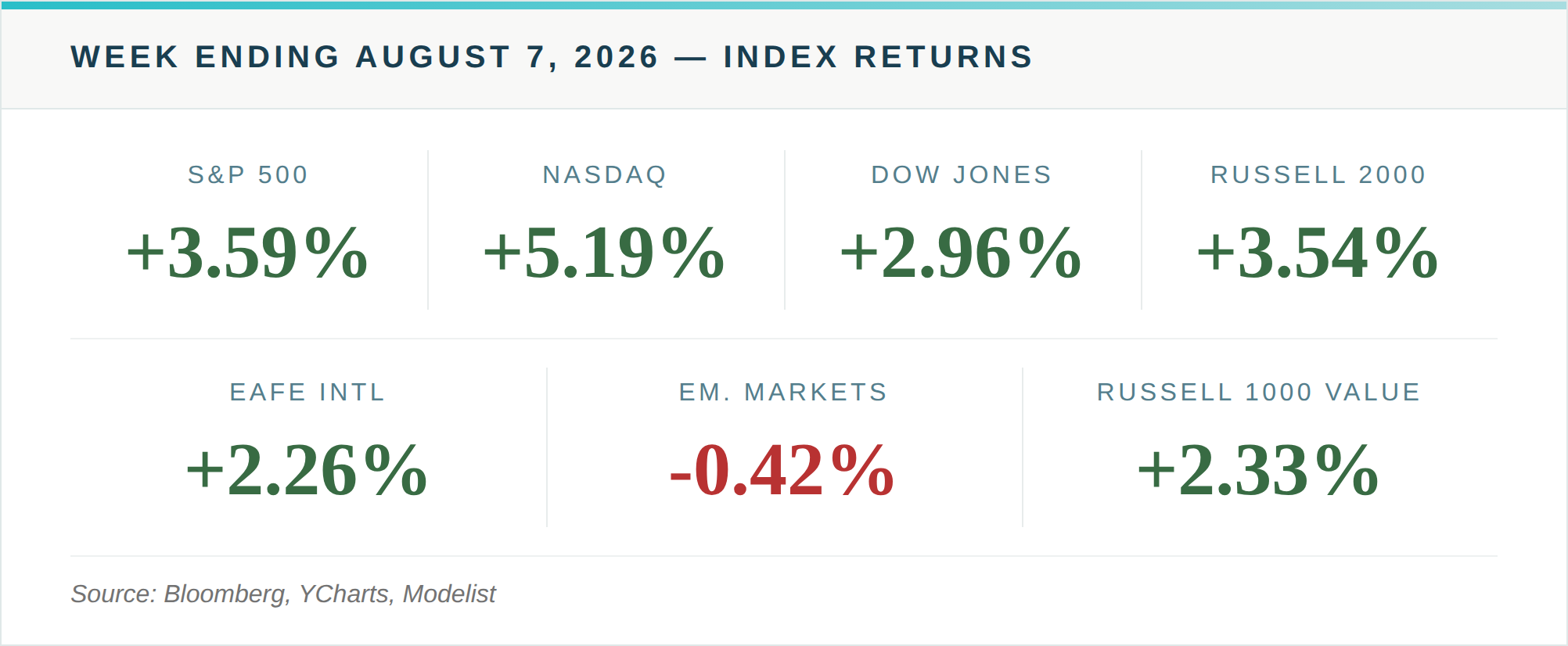
July payrolls fell by 23,000, and May and June were revised down by a combined 103,000. Unemployment held at 4.1%. Markets read that softness as reduced pressure for another Fed rate increase rather than as the opening of a downturn, and bought accordingly — the S&P 500 gained 3.59%, the Nasdaq 5.19%, the Dow 2.96%. Treasury yields moved in agreement: the 2-year fell 10 basis points to 4.20%, the 10-year 9 basis points to 4.65%.
That is a coherent read. It is also a premise with a test date. CPI lands Wednesday, with PPI Thursday behind it. If price pressure is cooling, last week's logic holds. If it isn't, a market has to reconcile softer hiring with firm inflation — a considerably less comfortable pairing than the one it priced Friday.
Where the Money Actually Went
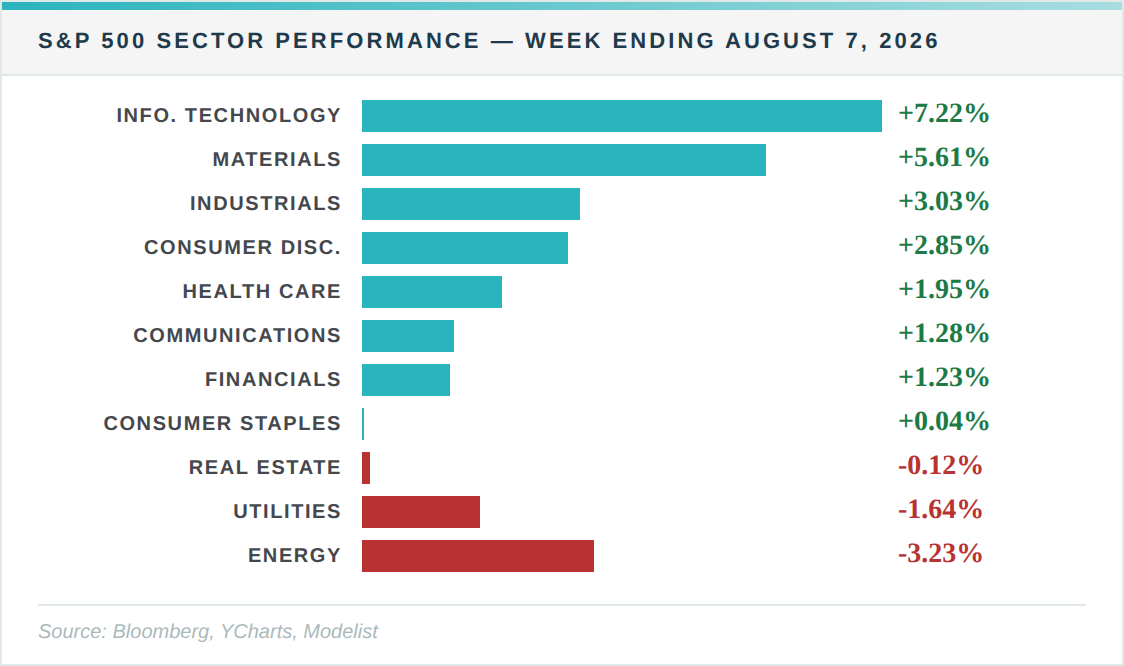
Information Technology gained 7.22% and Materials 5.61%. At the other end, Energy fell 3.23% alongside a $6.49 drop in crude, and Utilities fell 1.64%.
The Utilities number is the one worth sitting with. Falling yields are supposed to help the sectors people hold for income — when the risk-free alternative pays less, dividend payers ordinarily look better by comparison. Last week the entire curve moved lower and Utilities still finished down. Real Estate finished down as well, at 0.12%.
That is now two consecutive weeks. When the 30-year reached its highest yield in nearly twenty years at the end of July, income sectors sold off and rates were the obvious culprit. Last week rates gave some of that back, and the buyers did not return. The money leaving those sectors does not appear to be waiting for a friendlier yield environment. It is going somewhere else — specifically, to the highest-growth end of the market.
Durable Support and Borrowed Support
Not all of last week's strength rests on Wednesday. Second-quarter earnings have outpaced expectations by a wide margin, and profit growth has been broadening beyond mega-cap technology. That is real support, and a CPI print does not undo it.
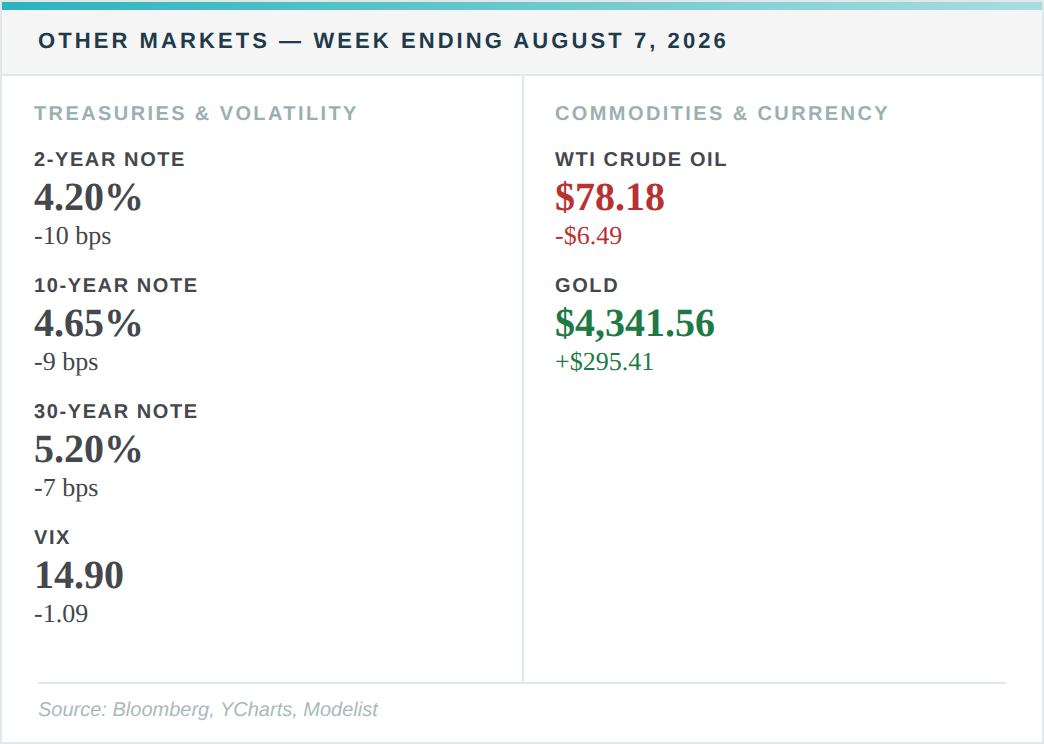
Crude is a different category. Oil fell to $78.18 a barrel on progress around the Strait of Hormuz, which genuinely lowers near-term inflation pressure — and which can reverse on a single headline. Gold's behavior in the same week is the tell: it gained $295.41 to $4,341.56 while the VIX fell to 14.90. Markets priced in less near-term conflict and kept paying up for insurance at the same time. Those two things do not usually travel together, and it is worth noticing when they do.
Want the Full Picture?
For the complete index returns, all 11 sector breakdowns, treasury yields, and commodities data, view the full report below.
View Full Weekly Market Report →
What This Means for Your Retirement Plan
If the income side of your portfolio has now lagged through both a rate spike and a rate decline, the useful question is not whether to wait for rates to fix it. It is whether the dollars you are actually spending over the next few years should have been sitting there in the first place. That distinction is what The Bucket Plan® is built on: near-term income comes from assets selected for when you will need them, not from whichever sector happens to carry the most attractive dividend yield this quarter. A portfolio segmented that way does not need Wednesday's CPI print to cooperate, because the money funding the next several years was never riding on it.
If last week felt good but you could not say which part of your portfolio produced the gain — or whether the part you are living on participated at all — that gap is worth an hour of someone's attention. Most people we speak with have never had anyone map their holdings against the specific years those holdings are meant to fund.
Schedule a 20-Minute Due-Diligence Q&A Call →