Weekly Market Commentary — Ceasefire Rally, Sticky Inflation, and a New Account Worth Knowing
The Week in Markets
Sunny with a chance of rain.
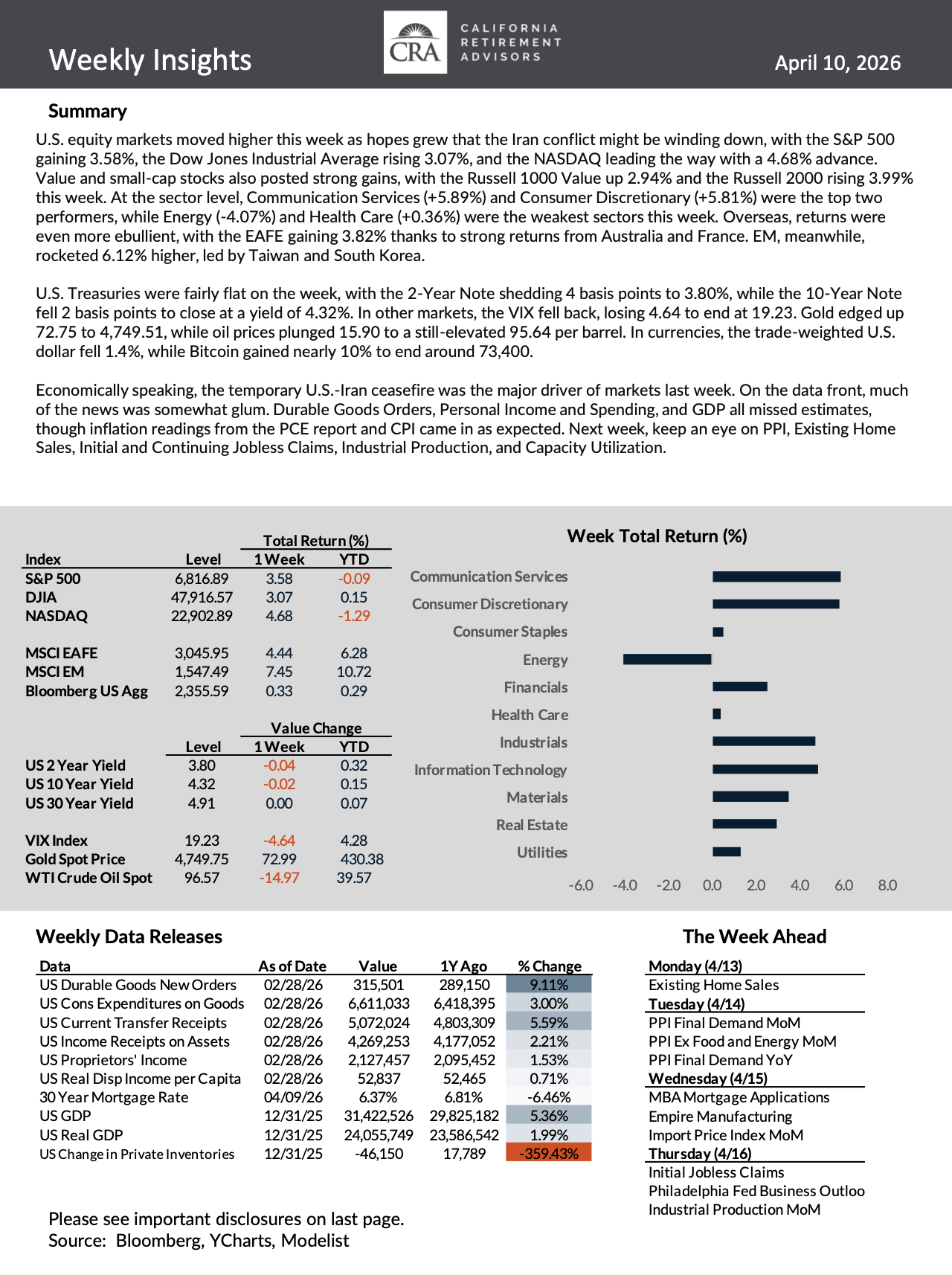
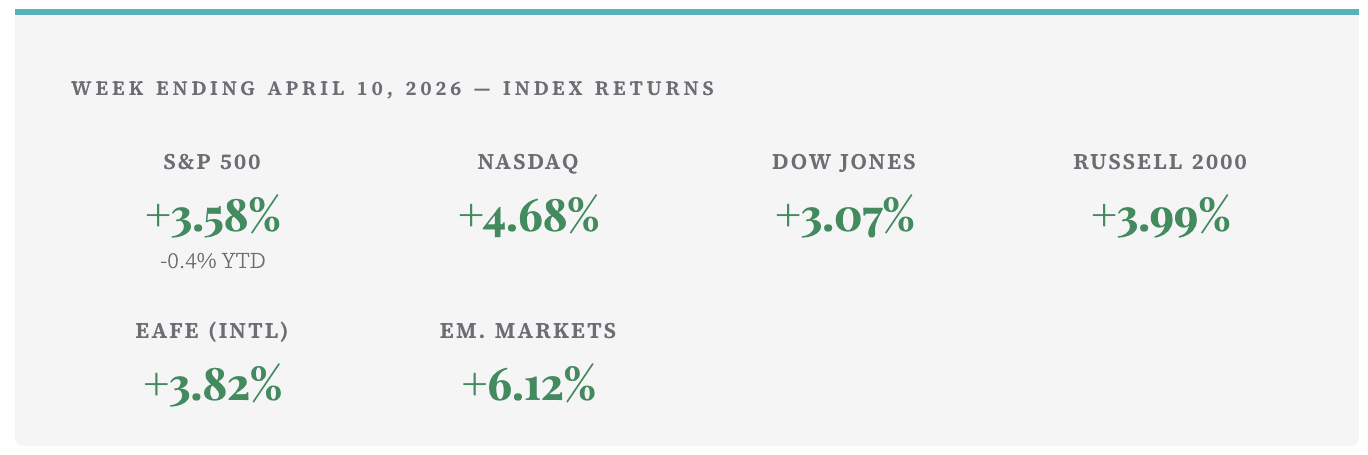
A two-week pause in the US-Iran conflict was the market's sunshine last week. The ceasefire announcement triggered the best single-day gain in nearly a year and erased most of March's drawdown. Small caps and international equities led the way — the Russell 2000 gained nearly 4%, Emerging Markets surged over 6% led by Taiwan and South Korea, and even the VIX retreated from its peak, closing at 19.23.
Friday brought some clouds. Consumer sentiment hit an all-time low in early April — down 11% month-over-month and 9% year-over-year across every demographic group. Energy infrastructure damage assessments weighed on sentiment, too: even with a ceasefire, Iran's control of the Strait of Hormuz is a structural development that won't resolve in two weeks.
Despite the Friday pullback, major indices finished the week solidly higher, and Treasury yields ticked down slightly across the curve.
Three Things We're Tracking
1. The Ceasefire Is Fragile — Watch April 21
The US-Iran-Israel ceasefire sent oil down roughly 13% and powered the rally. But the April 21 deadline is approaching fast, and Israeli activity in Lebanon hasn't fully stopped. If talks stall, tail risk re-enters the picture quickly — particularly for energy prices and the consumer. If talks progress, fundamentals can retake the wheel and earnings season becomes the main event.
2. Inflation Likely Peaks in Q2 — But the Squeeze Is Real
March CPI jumped 0.9% month over month — the largest print in four years — driven almost entirely by a 21% surge in gas prices. Annual headline inflation hit 3.3%. The good news: core inflation (excluding food and energy) held relatively steady at 2.6%, suggesting the war's effect on prices was largely contained to energy — so far.

April gas prices are already tracking higher than March's survey week, which means Q2 likely marks the peak before some moderation in the second half. The real concern is what this does to consumer spending — and by extension, to retirement income plans that assume relatively stable purchasing power.
3. Fed Cuts Are Back on the Table
Rate-cut expectations were nearly priced out at the peak of the Iran scare — markets briefly flirted with pricing in a hike. With oil pulling back, easing is being rebuilt into the forward curve, potentially arriving by year-end. Meanwhile, Q1 earnings season kicks off this week with the big banks. Analysts are projecting roughly 12.6% S&P 500 earnings growth — a slight trim from earlier estimates, but still what would be the sixth consecutive double-digit quarter. Guidance tone will matter more than the raw numbers.
The CRA Perspective
A ceasefire rally can feel like a green light — and for one week, it was. But inflation at 3.3%, oil still above $95, and consumer sentiment at an all-time low don't resolve in a week. We're watching all of it. Your income plan, tax strategy, and risk exposure are built for environments like this one, not just the last one — and that's exactly where our focus stays.
New This Year: "Trump Accounts" for Children
The One Big Beautiful Bill Act, signed last summer, created a new type of retirement savings account for children. Given how often CRA clients have conversations about legacy, gifting strategy, and multi-generational wealth transfer, this is worth understanding.
The Basics
- Open for any child under 18 with a Social Security number (must be age 17 or younger for the entire calendar year the account is opened)
- The U.S. Treasury seeds accounts with $1,000 for children born in the U.S. between January 1, 2025 and December 31, 2028
- Additional contributions up to $5,000/year can be made by parents, grandparents, employers (up to $2,500), charitable organizations, and government entities
- Funds cannot be withdrawn before age 18 — after that, the account follows traditional IRA rules
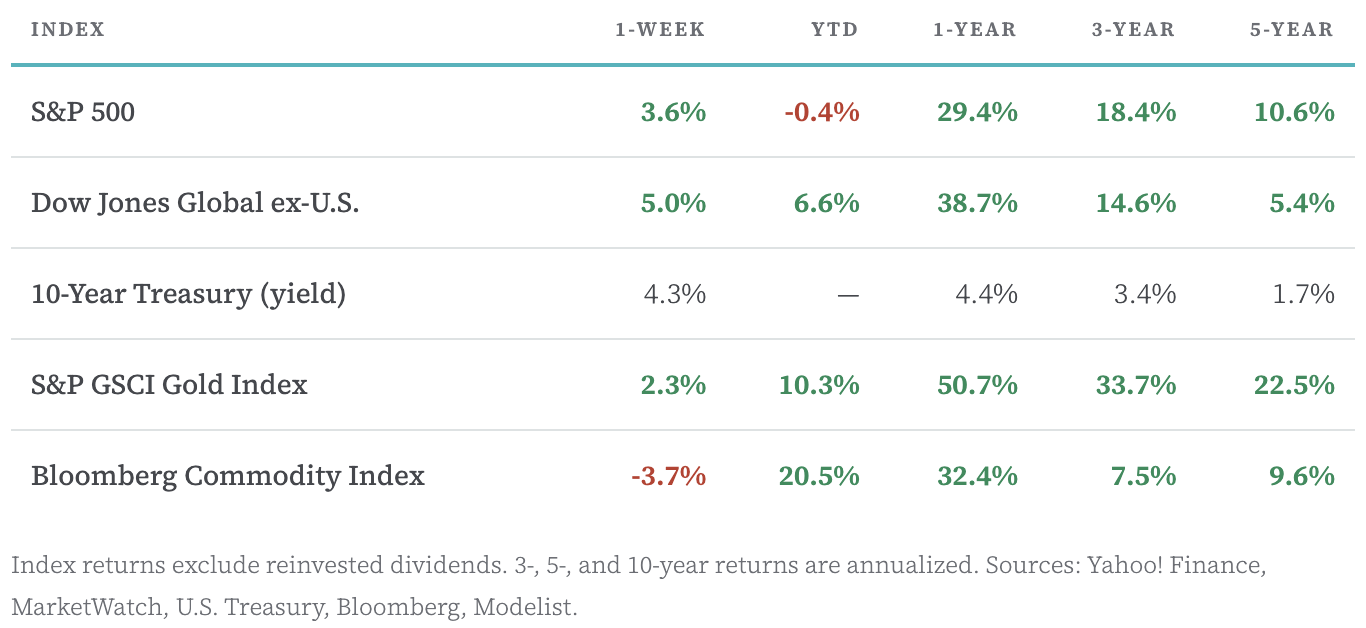
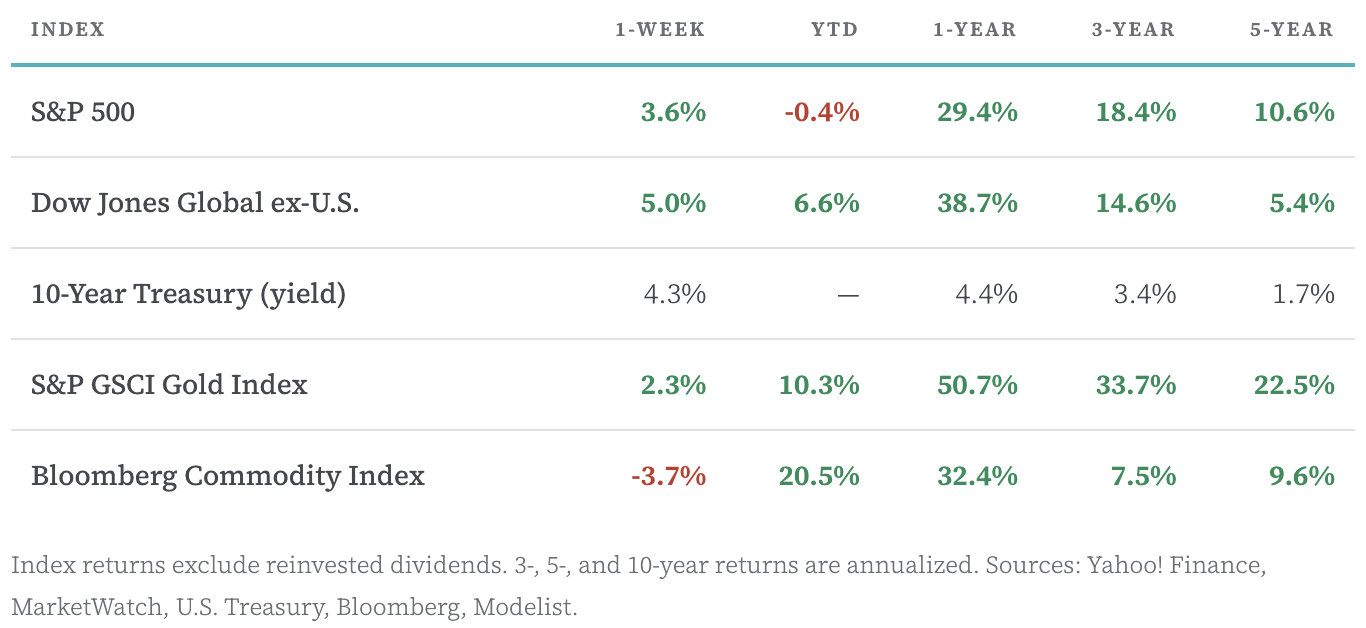
Projected Account Values (Assuming ~10.6% Average Annual Return)
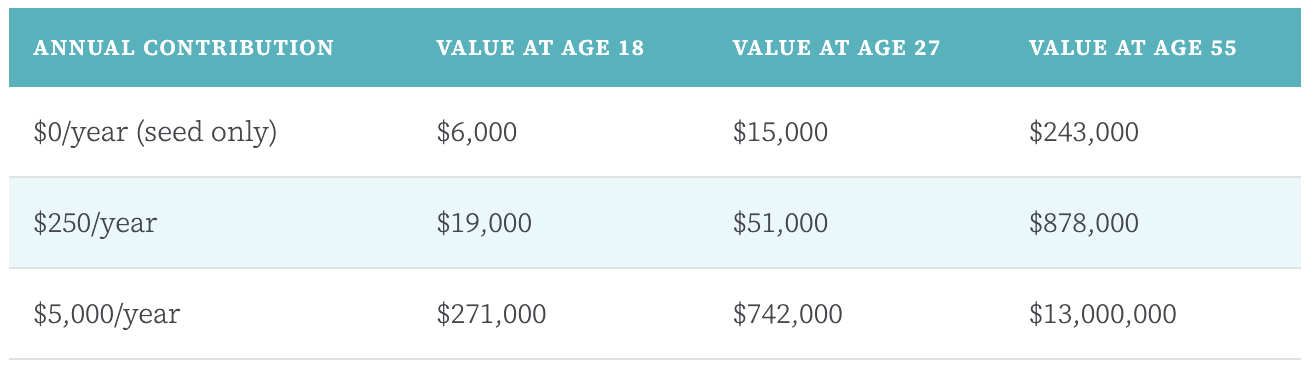
The numbers are compelling — but the right answer depends on how it fits alongside everything else: your estate plan, existing retirement accounts, and tax situation. Reach out if you'd like to talk through it.
Want More Detail? Full Market Data & Sector Breakdown
Our full weekly data report includes a complete equity and fixed income breakdown — sector-level performance, bond market moves, top and bottom S&P 500 stocks for the week, and economic calendar data.