
The Biggest IPO on Record Came the Week Tech Fell 12.1%. How Much of Your Plan Rides on Who's Right?
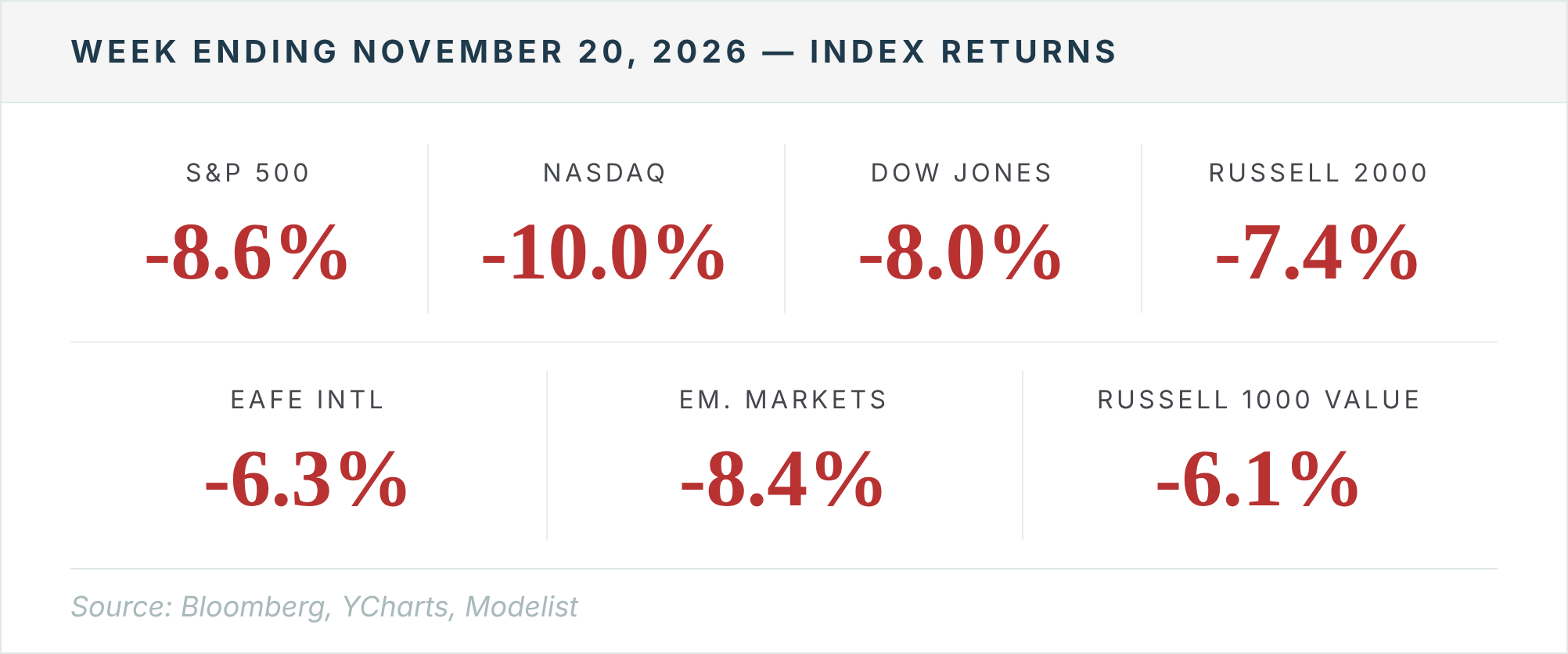
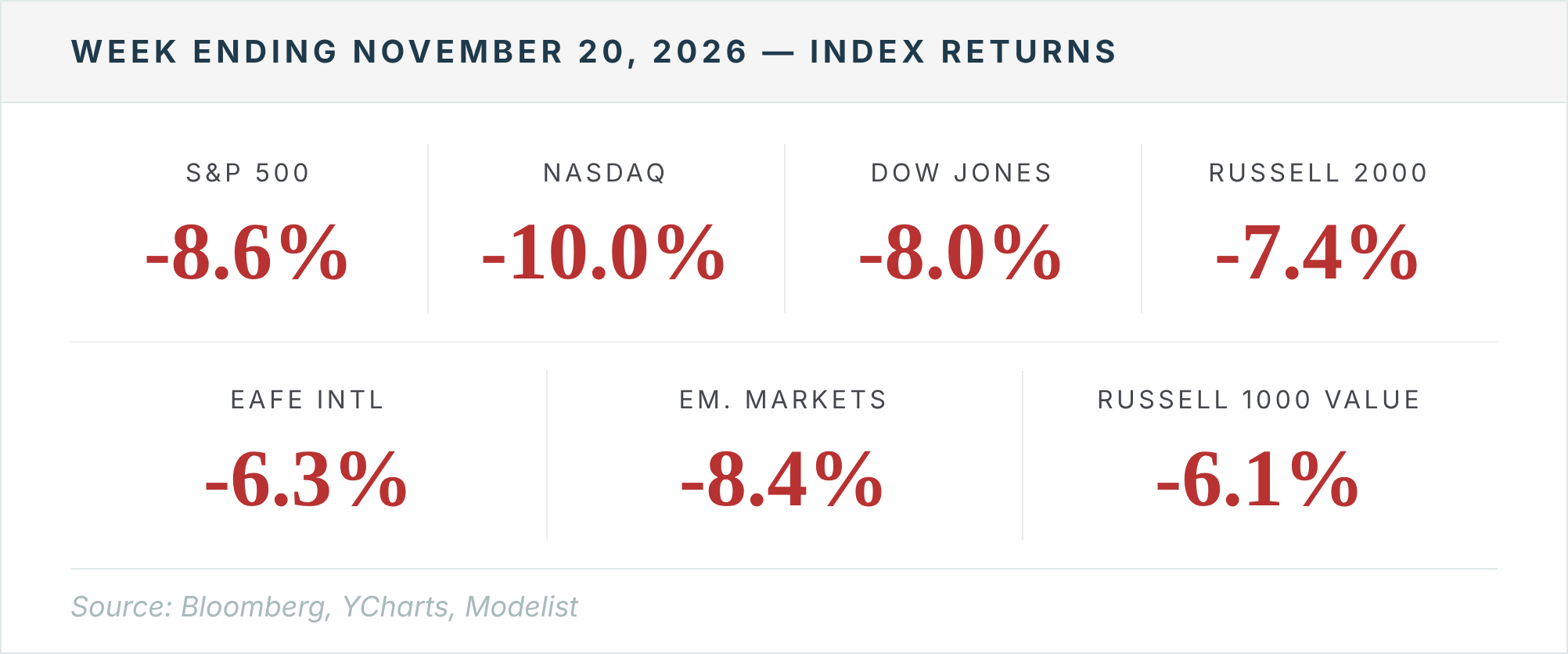
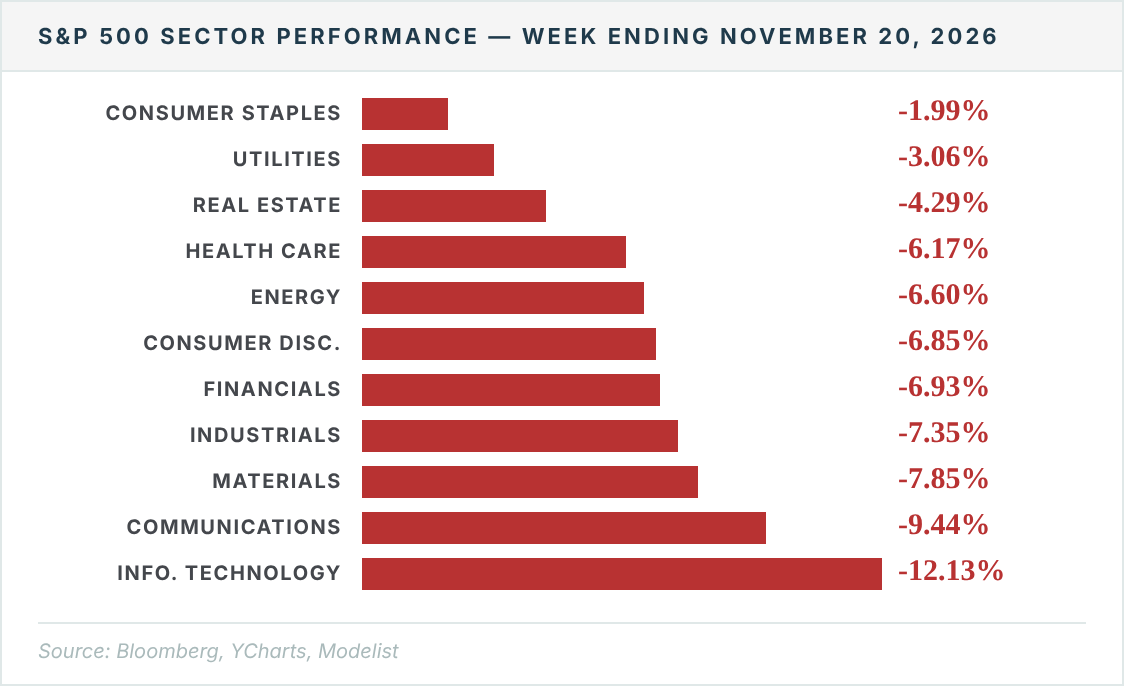
Last week, investors put about $81 billion into Anthropic in the largest IPO on record. Over the same five trading days, the S&P 500's Information Technology sector lost 12.1% and the Nasdaq had its worst week since March 2020. The money was making two very different bets on the same question: whether today's AI spending will pay off, and which companies will collect if it does.
What Happened
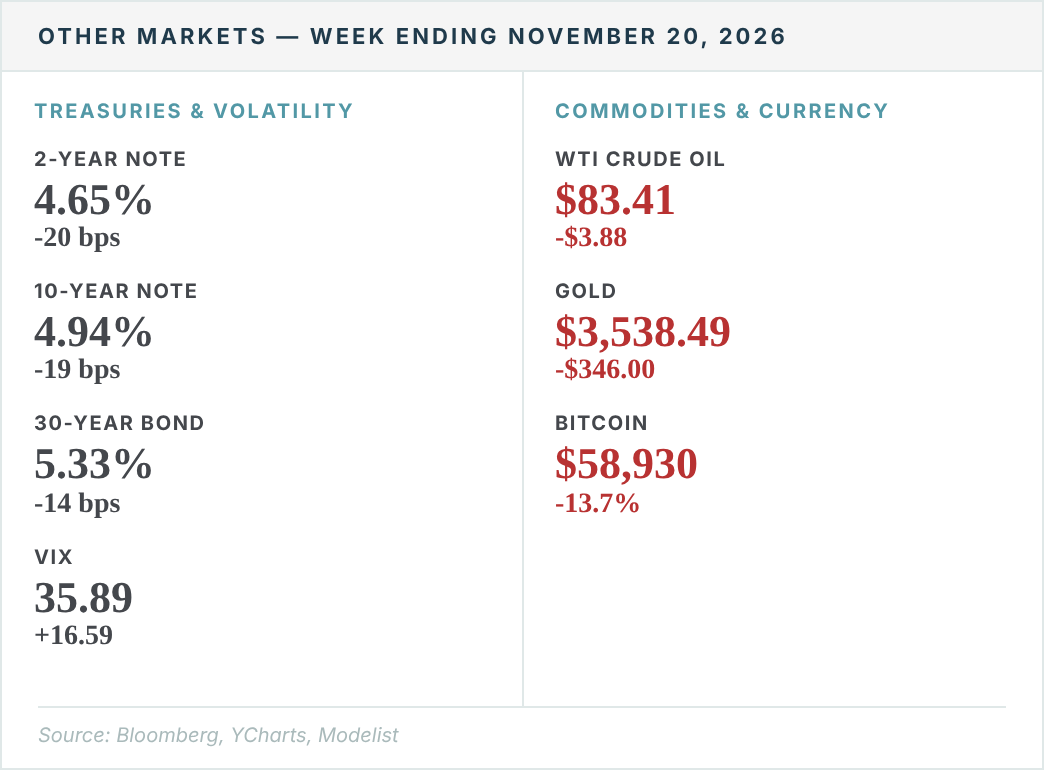
The steepest losses came where AI spending is the business. On price alone, Micron fell 23.6% and NVIDIA 22.9%, and the S&P 500's Growth and Momentum indexes each lost 10.9%. Consumer Staples, a sector with little riding on AI, lost 2.0%, and the Low Volatility index lost 3.2%. Not every decline traced back to AI: the Taiwan and South Korea ETF proxies fell 23.2% and 13.7% after the Commerce Department extended chip export controls on November 16, and gold fell $346 an ounce.
How an index is built decides how much of that question it carries. The S&P 500 weights each company by its market value, so its largest technology names count for far more than the average stock. Through November 20, the S&P 500 is up 2.0% for the year, while the equal-weight version of the same 500 companies is up 9.8%. We made a version of this point on November 2, when most stocks rose and the index fell. Last week the same weighting worked in the other direction, at a much larger size.
Bonds helped this time. The 10-year Treasury yield fell 19 basis points to 4.94% and the Bloomberg US Aggregate returned 1.2%, while long-term Treasuries gained 2.4%, one week after losing 2.9% as stocks rose. The week before, the pressure came from hotter October inflation data; last week it came from doubts about whether AI spending will earn its cost, and long-term bonds tend to move in opposite directions in those two cases.
What It Means for Your Retirement Plan
No one knows yet whether the spending will pay off. A retirement plan can do without that answer, but it does need to know how much of the next few years' spending depends on it. That is harder to see than it sounds. A statement shows how much of an account is in stocks, but rarely how much is in the same few companies. A broad index fund in an IRA, a large-company growth fund in a 401(k) and shares kept from a former employer can all lean on the same names, and the overlap only shows when the accounts are added together. Someone holding all three may own the same chipmaker several times without ever having chosen to.
The Bucket Plan® sorts savings by when the money will be spent and sets risk for each group separately, and concentration is part of that risk. Money meant for spending a decade from now can hold growth companies through a week like this one, because it has years to recover. Money meant for the next two or three years of withdrawals is held to a tighter limit on how far any one sector can move it, so a 12% drop in technology stocks doesn't force a sale at lower prices to cover a withdrawal.
One number is worth having before the next week like this: across every account you own, how much of your stock exposure sits in the companies that fell the most, and which years of spending that money is meant to cover. If much of it sits in money meant for the next few years, that is the part of the plan to look at first. If you are not getting your questions on this topic answered by your current financial advisor and would like to discuss working with us, you may request a meeting here.
Schedule your 20-Minute Due-Diligence Q&A Conversation
What We're Watching
Wednesday, November 25: the Bureau of Economic Analysis releases its second estimate of third-quarter GDP and October personal income and outlays, including the PCE price index, at 8:30 a.m. Eastern. The Census Bureau's advance report on October durable goods orders is also due at 8:30 a.m., followed by October new home sales at 10:00 a.m.
Thursday, November 26: U.S. stock markets are closed for Thanksgiving, and the NYSE closes early, at 1:00 p.m. Eastern, on Friday, November 27.